


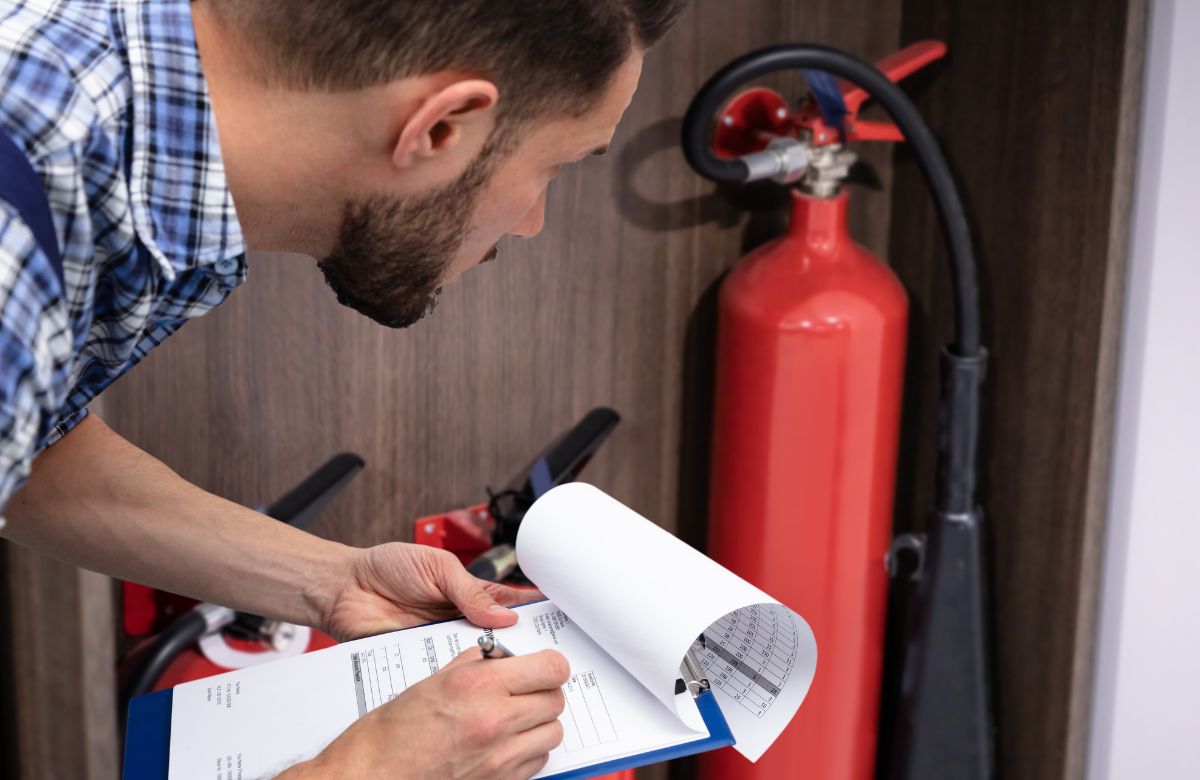

The rapid expansion of short-term rentals has increased the need for consistent and reliable fire-safety measures in properties that accommodate guests across the country. In this context, the Hellenic Fire Service has introduced the new “Fire Safety Guide for Short-Term Rental Properties,” a document that for the first time consolidates all mandatory safety requirements and additional preventive practices that property owners may adopt.
Mandatory fire-protection measures for all properties
Fire extinguishers with specific technical standards and capacity levels
Every property offered for short-term rental must have at least one portable fire extinguisher, with its specifications depending on the capacity and layout of the accommodation.
Specifically, the Guide sets out the following:
For properties accommodating up to six guests:
A fire extinguisher with a rating of 13A–55B–C, certified under European standard EN 3-7.For properties accommodating more than six guests:
A 21A–113B–C fire extinguisher, also certified under EN 3-7.For kitchens where fats and cooking oils are used:
A mandatory 5F fire extinguisher designed for cooking-related fires, also compliant with the same standard.
All extinguishers must be placed in a clearly visible location, ideally near the main entrance or exit, and accompanied by appropriate signage. Their maintenance must follow the requirements of the 15th Fire Service Regulation, including proper documentation and certification.
Mandatory installation of standalone smoke detectors
The Guide requires the installation of smoke detectors in all areas of the property. These devices must comply with the EN 14604 standard, which defines operational accuracy and reliability.
In the kitchen, a heat detector is recommended to prevent false alarms caused by steam or cooking fumes.
Escape signage and emergency lighting in line with European standards
A key requirement concerns the proper marking of emergency exits. Properties must include:
Escape-route signage compliant with EN ISO 7010
Emergency lighting that remains operational during a power outage to ensure visibility along escape routes
At least one emergency light at the property’s main exit
Where multiple escape routes exist or the layout is unclear, the Guide also recommends the installation of an escape-route diagram compliant with ISO 23601.
Special provisions for properties with LPG or fireplaces
Where liquefied petroleum gas or natural gas is used, all installations must comply with applicable safety standards.
Properties with fireplaces or open-flame appliances must also have a fire blanket certified under EN 1869.
Optional but important fire-safety measures
Gas and carbon monoxide detectors
The Guide recommends installing:
A carbon monoxide detector in properties with a fireplace
A gas leak detector where LPG or natural gas is used
These devices are not mandatory but significantly enhance guest safety and are standard practice internationally.
Ensuring safe evacuation
Chapter C of the Guide details evacuation guidelines:
Corridors and stairways must remain free of obstacles and have a minimum width of 0.80 m
Doors must open easily and without keys
Elevators must not be used during evacuation
Non-slip surfaces on stairs are recommended
Safety instructions for guests
The Guide advises providing guests with clear instructions in Greek and at least one international language, including:
Emergency numbers (199, 112, 100, 166)
The exact address and GPS coordinates of the property
The nearest hospital
Basic safety recommendations for appliances and fire prevention
Fire Risk Assessment Form
Chapter D introduces a new self-assessment tool: the Fire Risk Assessment Form, completed by the owner or manager. This document serves as an internal evaluation mechanism, helping identify risks, omissions and additional measures that can improve the property’s overall safety.
Here you may find the Fire-safety guide for short-term rentals in Greece
