


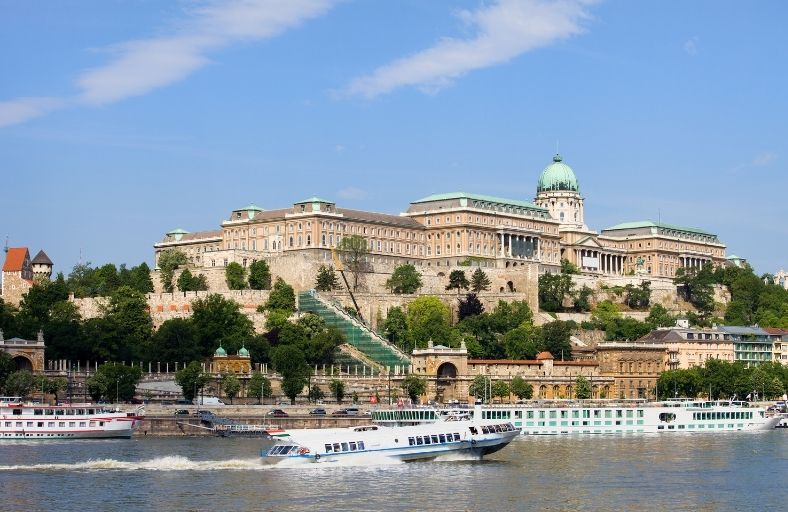

The majority of residents who participated in an online consultation in Budapest’s first municipal district, which includes the historic Buda Castle area, support a complete ban on short-term rental accommodation, including properties listed on platforms such as Airbnb.
According to the results announced on October 8, 2026, by the district’s mayor, László Böröcz, 4,503 residents took part in the consultation. Of these, 58.6% supported a complete ban on short-term residential rentals, while 41.4% opposed such a measure.
However, participation was limited to 21% of the 21,450 permanent residents eligible to take part. This is an important factor in assessing the outcome, as it reflects the views of those who participated rather than the district’s entire population.
According to Daily News Hungary, opposition to a complete ban was not accompanied by a unified proposal for the future of short-term rentals. Of all participants, 18% preferred allowing the activity to continue under specific local conditions, while 23.4% supported its continuation without additional restrictions.
The strongest support for a ban was recorded in the Buda Castle area, where the figure reached 66%.
The municipal authority’s next steps
The consultation result does not mean an immediate ban on short-term rentals. The municipal authority intends to consider residents’ views alongside the findings of an impact assessment before drafting a specific regulatory proposal.
According to the announced plans, the initial draft regulations will be published for public consultation, after which the final draft regulation will be prepared. The proposal was expected to be reviewed by the relevant committees and the municipal council in November.
Mayor László Böröcz has stated that the municipal authority aims to preserve the Castle District as a quiet and sustainable residential area, with clear and enforceable local rules.
The debate concerns an issue at the center of disputes in many European cities: balancing the economic benefits of tourism with the need for permanent housing and residents’ quality of life.
The expiry of the moratorium and concerns over a new increase
The timing of the consultation is no coincidence. According to published information, the current national moratorium on registering new short-term rental properties is scheduled to expire at the end of 2026.
The municipal authority is seeking to establish its position in advance regarding the rules that will apply in the district after the restriction expires. As it has pointed out, there is a risk that applications for new short-term rentals could increase significantly if the existing restrictions are lifted.
At the same time, the discussion focuses on the impact that this activity may have on the daily lives of permanent residents, the operation of apartment buildings and the peace of residential neighborhoods. The Castle District is particularly significant because it combines historic character, residential housing and heavy tourist activity.
The question that local authorities must answer is whether these concerns can be addressed through stricter operating conditions or whether a complete ban on the activity is necessary.
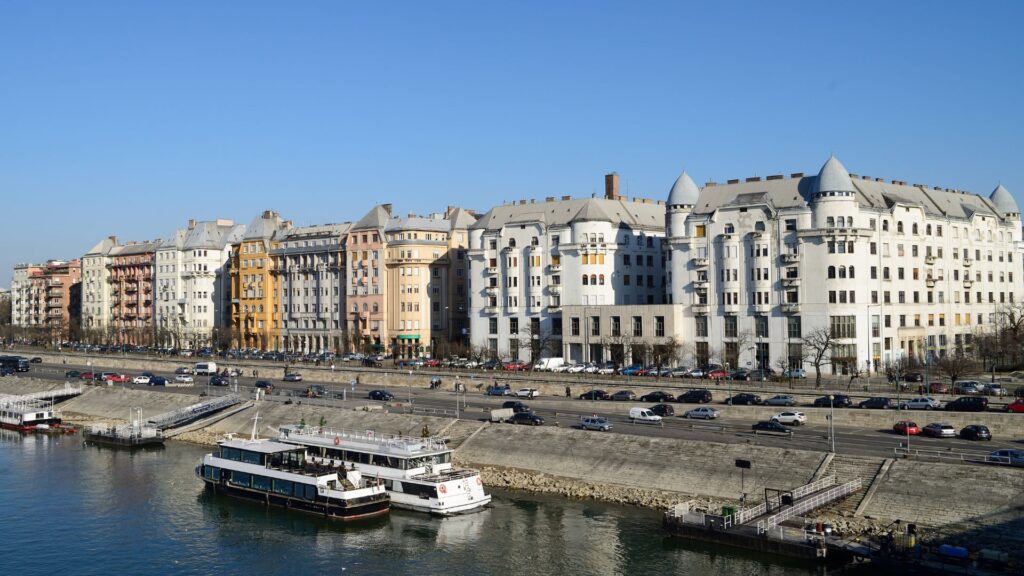
Budapest considers different models of restrictions
The first district is not the only area in Budapest seeking to restrict or redefine the operation of short-term rental accommodation.
In the sixth district, Terézváros, a ban on these rentals has already been introduced, taking effect in January 2026 following a local referendum. This development has become a point of reference for other municipal districts considering similar measures.
In the eighth district, Józsefváros, the municipal council approved a regulatory framework in June 2026 that provides for limits on the number of rental properties, both across the district and within specific areas and apartment buildings. The plan includes, among other measures, proposed caps and conditions for the operation of new properties.
Meanwhile, in the thirteenth district, a public consultation on draft regulations concluded on October 2, although the final outcome had not been announced at that time. According to local government figures, approximately 1,100 to 1,200 apartments in the area operate as private short-term rental accommodation.
The different approaches taken by the districts show that there is no single model for addressing the issue across the Hungarian capital. Some areas are opting for bans, while others are moving toward percentage-based caps and specific operating rules.
A ban or restrictions on Airbnb rentals in Budapest?
For Budapest’s first district, the critical issue will be translating the consultation results into a specific regulatory framework. The impact assessment, public consultation and review of the proposal by the relevant municipal bodies will determine whether a complete ban or a different system of restrictions is adopted.
The voting results show a clear majority in favor of a ban among participants. However, the relatively limited participation and the differing proposals among those who opposed the measure highlight the complexity of the issue.
In any case, developments in Budapest add another chapter to the ongoing European debate over the limits of using residential properties for tourism, at a time when local authorities must weigh residents’ needs, property owners’ interests and the importance of tourism to urban economies.
