



Cyprus is entering a period of rapid construction growth, with the number of new homes covered by building permits rising by almost 68% in just one year and the value of approved projects exceeding €2.5 billion. Larnaca is emerging as one of the key drivers of the market, accounting for nearly 30% of all new homes approved nationwide. Meanwhile, growing demand for apartments, interest from foreign buyers and the use of properties for tourism are reshaping the Cypriot real estate market. However, behind the impressive increase in building permits, actual construction activity is growing at a much slower pace, as labour shortages and rising construction costs delay the implementation of new investments.
According to an analysis by Delfi, based on data from the Statistical Service of Cyprus, the Central Bank of Cyprus and the Department of Lands and Surveys, building permits issued during the first half of 2026 covered the construction of 11,100 homes, an increase of 67.8% compared with the same period in 2025. This is more than double the average number of homes recorded during 2021–2023 and the highest first-half figure since 2020.
The declared value of projects granted building permits reached €2.57 billion, representing a year-on-year increase of 48.2%. These figures reflect strong activity in the property development sector, but also highlight a critical issue for the market: an increase in building permits does not automatically translate into more available homes, as considerable time can pass between the planning and completion of a project.
The market shifts towards apartment buildings and flats
The sharp increase in new homes is not primarily the result of more building permits being issued, but rather a change in the types of projects being developed. The Cypriot market is increasingly shifting towards apartment buildings and residential complexes, meaning that each new permit now covers a larger number of housing units.
Compared with the 2021–2023 average, the number of building permits increased by just 15%, while the number of homes covered by those permits more than doubled. The average number of homes per permit rose from 1.4 to 2.5, reaching 2.68 in the second quarter of 2026.
This trend is even more evident in the figures for the first five months of the year. Of the 8,978 homes approved, 6,667 were apartments in multi-unit buildings, an increase of 90.6% year on year. Over the same period, the total number of approved homes rose by 63.7%, confirming that apartments have become the main driver of new construction activity.
At the same time, the average size of new homes is decreasing, with the floor area per residential unit falling from 216 to 189 square metres. The average declared value per home also declined from €251,000 to €231,000. This development is linked to the growing share of apartments in new projects and does not necessarily indicate a reduction in final selling prices.
It is worth noting that this shift does not reflect any significant movement of construction activity from rural to urban areas, as the latter continue to account for approximately 73% of approved homes. Instead, the change mainly concerns the types of properties being built.
Larnaca reshapes the investment landscape
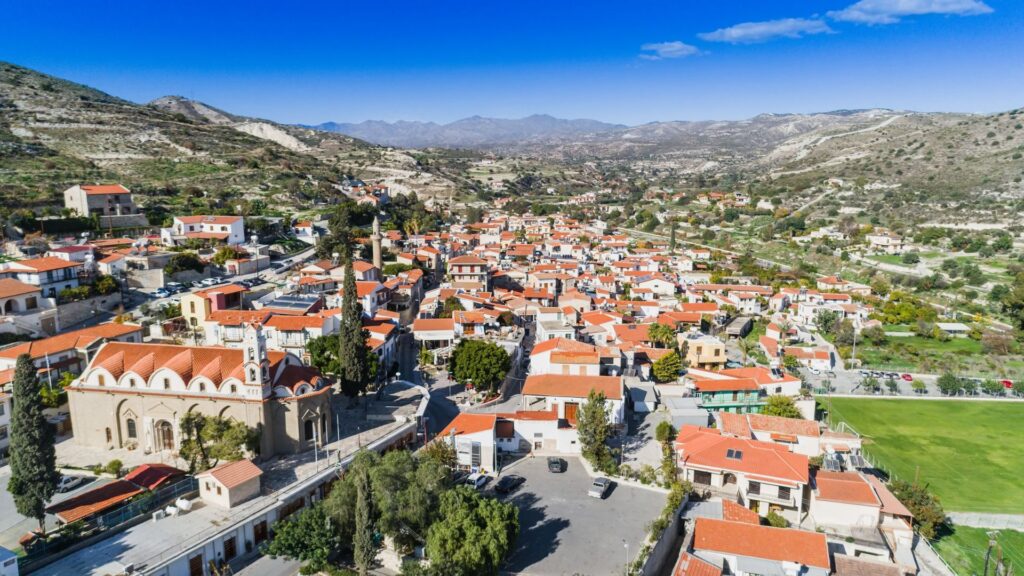
The most significant shift in Cyprus’s property market is taking place in Larnaca, which is becoming one of the country’s leading centres for new residential developments. Of the 4,484 additional homes approved nationwide during the first half of 2026, 2,053 are located in this district. In total, 3,277 homes were approved in Larnaca, four times the average recorded during 2021–2023.
Larnaca is now approaching Limassol, where 3,527 homes were approved, and has overtaken Nicosia, which recorded 3,029 new residential units. This development is particularly significant, as Nicosia held the leading position in terms of approved homes just one year earlier.
Larnaca’s share of all new homes increased from 18.5% to 29.5% within a year, marking the largest change among Cyprus’s districts. Moreover, development is not limited to urban areas. In the district’s rural areas, new housing approvals increased by 239%, compared with 135% in urban areas. As a result, rural locations now account for 40% of Larnaca’s new residential development activity.
This momentum indicates that housing development is expanding across a wider geographical area, creating new opportunities for land use and residential property investment.
New housing approvals grow faster than property sales
Alongside construction activity, demand for property remains strong. During the first half of 2026, 10,007 property sale contracts were recorded, with the Cypriot market exceeding 10,000 transactions in a six-month period for the first time.
However, building permit approvals are increasing significantly faster than property sales. In four of the country’s five districts, the number of approved homes is growing at a rate three to fifteen times faster than the rate of property transactions.
The largest gap is recorded in Larnaca, which accounts for 29.5% of approved homes but only 21.6% of sales. Similarly, Nicosia represents 27.3% of new homes and 21.3% of transactions.
The picture is different in Paphos, where nearly 20% of the country’s property sales take place, despite the district accounting for just 9.6% of approved homes. Foreign buyers play a particularly important role, representing approximately 70% of sales in Paphos, compared with 47% in Larnaca.
This comparison does not mean that the market is already facing an oversupply problem, as building permits concern future homes, while sales include both newly built and existing properties. However, according to Delfi, if the increased supply is not accompanied by a corresponding rise in demand, the first signs of pressure could emerge in Larnaca and Nicosia.
The role of Airbnb and tourism-related property investment
Another factor shaping Cyprus’s property market is short-term rentals, which provide an additional option for property use, particularly in areas with strong tourism activity, such as Paphos, Larnaca and the coastal destinations of the government-controlled part of Famagusta district.
Renting properties through platforms such as Airbnb creates additional opportunities for owners and investors, while also influencing decisions about how new homes will be used. This development is particularly relevant at a time when construction activity is increasingly focused on apartment developments.
The approval of 11,100 new homes within six months does not necessarily mean that all of them will enter the permanent housing market. Some of these properties, particularly in tourist areas, may be used for short-term accommodation, as holiday homes or for other investment purposes.
Paphos is a particularly interesting case, as the high proportion of foreign buyers in property transactions highlights the importance of international demand. However, foreign property purchases do not necessarily translate into short-term rentals, as homes may be intended for owner occupation, holiday use or long-term rental.
Similarly, in Larnaca, where the strongest growth in new residential developments is being recorded, tourism-related property use represents one possible option for new apartments. The available data, however, do not indicate how many of the approved homes are specifically intended for short-term rentals.
The key question for the coming years is whether the sharp increase in construction activity will significantly expand housing availability for permanent residents or whether part of the new supply will be absorbed by the tourism and holiday property market.
House prices continue to rise despite the surge in building permits
Despite the sharp increase in new residential developments, house prices in Cyprus continue to rise, as the additional supply has not yet reached the market. According to the House Price Index published by the Statistical Service of Cyprus, the second quarter of 2026 recorded an annual increase of 7.9%, the highest since the second quarter of 2024. The corresponding index from the Central Bank of Cyprus showed an even stronger increase of 8.5%.
At district level, Larnaca recorded a 9.8% increase in prices, followed by Paphos at 9.6%. The rise was particularly pronounced in apartments, whose prices increased by 8.9%, compared with 5.8% for houses. This development is noteworthy, as apartments account for the largest share of new building permits. However, the increase in approvals has not yet affected actual housing supply, as it typically takes two to three years from the issuance of a permit to the completion of a project.
As a result, the impact of new developments on the property market is expected to become more noticeable from 2027 onwards, when homes approved during 2025–2026 begin to be delivered.
Shortage of 5,000 workers slows construction activity
The biggest obstacle to implementing new investments now lies within the construction sector itself. Over the past twelve months, building permits covering 20,655 homes were approved in Cyprus, twice the annual average recorded during 2021–2023. At the same time, new mortgage lending increased by 19.5%, while property sales rose by 14.6%.
Despite this strong activity, actual construction output, measured at constant prices, increased by just 1.4%, highlighting the gap between project planning and implementation.
A key reason is the shortage of workers, which is becoming one of the sector’s most significant challenges. According to available data, 38% of construction companies identify staff shortages as a major obstacle to their operations, compared with just 11% in 2022. The Federation of Building Contractors Associations of Cyprus estimates that the construction sector faces a shortage of approximately 5,000 workers. Difficulties in recruiting skilled personnel affect both the launch of new projects and the progress of those already under construction.
Meanwhile, construction costs continue to rise. Prices in the construction sector increased by 4.7%, almost three times the 1.6% rise recorded in building material prices. This difference suggests that cost pressures are not driven solely by materials, but are also linked to labour costs, the availability of construction crews and contractors’ pricing.
