


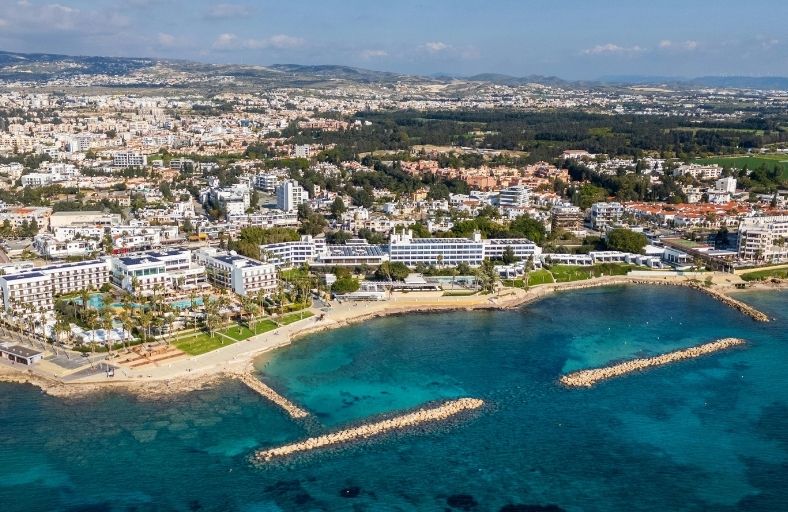

Three actions to attract year-round tourism are being activated by the Deputy Ministry of Tourism of Cyprus. They concern attracting foreign sports teams for training in Cyprus, promoting golf and highlighting the island as a destination for hosting international conferences and corporate meetings.
These actions can obviously create significant opportunities for hotels, other organized tourism businesses, as well as for the short-term rental market.
More specifically, the Deputy Ministry of Tourism is proceeding with the implementation of two new four-year incentive schemes for the period 2026-2029, aiming to attract foreign sports teams and international conference tourism events. At the same time, it is strengthening the promotion of Cyprus as a golf destination, seeking to make use of a product that, by its nature, can support tourism during the months of lower demand.
Incentives of up to €35,000 for conferences and corporate events
The new “Incentive Scheme for Attracting Conference Tourism Events 2026–2029” provides financial support of up to €25,000 for conferences and meetings, up to €35,000 for corporate conferences, up to €20,000 for incentive trips and up to €10,000 for international competitions and sales workshops.
It is noted that additional support is provided for events taking place in January and February, as well as from November to April when these are hosted in rural, mountainous, border and remote areas.
The four-year duration of the scheme also allows organizers and tourism bodies to plan international events several years in advance, while the predetermined basis of the financial incentive offers greater predictability.
Sports tourism also in focus
At the same time, the new “Incentive Scheme for Attracting Foreign Sports Teams for Training in Cyprus 2026-2029” is being put into effect.
The aim is to strengthen sports and training tourism, which is a special form of tourism of first priority within the framework of the National Tourism Strategy 2035.
The financial incentive is shaped according to the tourism benefit, the period and the training area, the sports of strategic priority, as well as the participation of athletes with disabilities.
Of particular interest for the effort to extend the tourism season is the fact that additional incentives are provided for training during the months from December to February, as well as for training activities in mountainous, rural, border and remote areas.
The budget of the scheme for 2026 amounts to €400,000, while its implementation will continue until December 2029.
Golf as a “Vehicle” for year-round tourism
The new tourism campaign for golf is moving in the same direction.
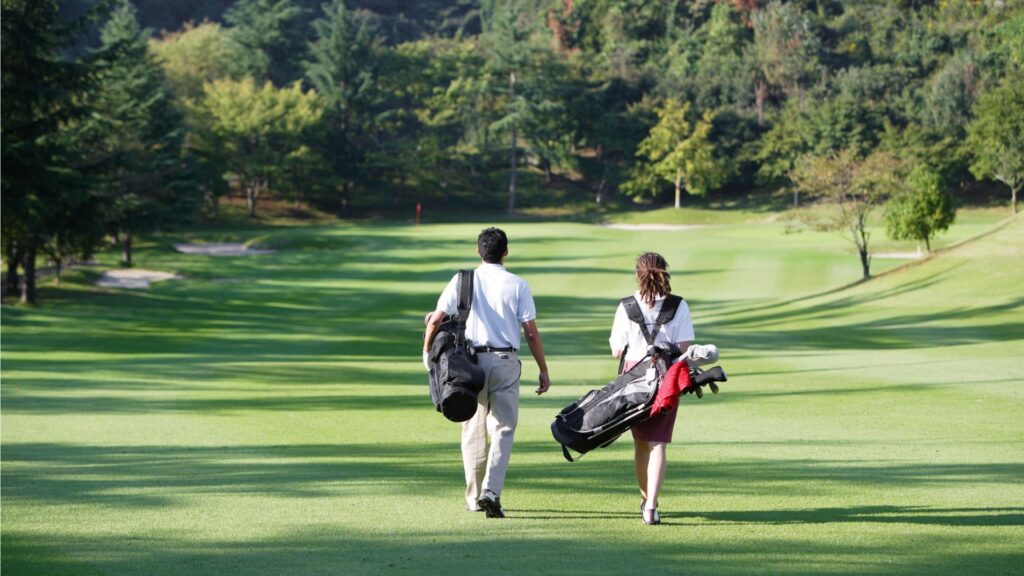
Through the brochure “From Tee to Green: Cyprus is a Golfer’s Dream”, the Deputy Ministry of Tourism promotes Cyprus as a year-round destination for lovers of the sport, making use of the Mediterranean climate, the natural environment and tourism infrastructure.
The country now has five golf courses of international standards with 18 holes: Aphrodite Hills Resort – PGA National Cyprus, Elea Golf Club, Minthis, Columbia Secret Valley and the new Limassol Greens.
The development of golf is particularly important for the strategy of extending the season, as the product can be linked to travel outside the traditional summer months.
The growth prospects for short-term rentals
The development of these special forms of tourism creates new prospects for the short-term rental market in Cyprus as well.
The first and most immediate opportunity lies with sports teams. A team staying in Cyprus for a training camp does not necessarily have the same needs as a family tourist. It needs a longer stay, multiple beds, shared spaces, a kitchen, a washing machine, space for equipment and, in some cases, more privacy.
This creates room for larger apartments, villas and accommodation complexes that can offer multi-day or multi-week hospitality to sports teams. The same applies to escorts, coaches and athletes’ families.
The big opportunity is the months of low demand.
Even greater importance lies in the timing. The Deputy Ministry’s incentives direct part of the demand toward the months from November to April, while especially in sports tourism, emphasis is also placed on December, January and February. It is precisely during this period that short-term rentals can seek additional clientele.
Instead of competing exclusively for summer bookings, owners can adapt their product so that it appeals to sports teams, conference delegates, corporate executives, event participants and golf players.
This targeting could reduce seasonality and increase occupancy during the months when many properties remain in low demand.
How the short-term rental market can make use of the measures
Some of the moves that can be made by the short-term rental market are the following:
1. Create packages for teams: Large houses and apartments can be promoted to sports clubs as a complete accommodation solution, with prices based on duration and number of guests.
2. Target longer stays: Training camps, conferences and corporate events can generate bookings of several days or weeks. For short-term rentals, this means that the strategy does not need to be limited to seeking bookings of two or three nights.
3. Adapt amenities: High-speed Wi-Fi, workspaces, a full kitchen, a washing machine, multiple bedrooms, parking spaces and the ability to accommodate larger groups can be important competitive advantages.
4. Connect with organizers: Owners and industry professionals can seek partnerships with sports agencies, conference organizers, event management companies, travel agencies and sports federations, instead of relying exclusively on the major booking platforms.
5. Make use of the regions: The additional incentives for mountainous, rural, border and remote areas create possibilities for the development of accommodation that until now struggled to compete with seaside tourism centers.
The most important message for the short-term rental sector is that Cyprus’ tourism policy is creating new categories of demand.
The visitor who comes for a one-week holiday in August is no longer the only potential customer. A sports team may need accommodation in January, a company may be looking for lodging for its executives in February, an international conference may bring hundreds of visitors in November and a group of golf players may choose Cyprus in spring or autumn.
This means that short-term rentals can evolve from a product that depends mainly on summer holiday tourism into a more specialized hospitality product, covering different needs and different periods of the year.
For Cyprus, the next four years can become a period of significant diversification of the tourism product. For short-term rentals, they can become the opportunity to establish their market as a year-round offering.
