



The housing market in Attica appears to be entering a new period of equilibrium. Rents for family homes continued to move upward during the first quarter of 2026; however, the pace of increase has slowed noticeably compared with previous years. The sharp price increases that characterized 2023 and the beginning of 2024 have now given way to a market that remains strong but is showing clear signs of maturity.
This development is not driven by a single factor. The limited supply of new housing, strong demand from both Greek and foreign households, the growth of the property market in recent years, and the utilization of a significant number of apartments through short-term rentals continue to influence the market. At the same time, the new regulatory framework for short-term rentals is shaping new conditions for both property owners and investors, creating a different balance between tourism-related use and long-term housing.
Short-term rentals have become part of the new equation
The expansion of short-term rental platforms in recent years has significantly changed the way the housing stock is utilized, particularly in areas with intense tourism activity and strong demand from visitors. In several neighborhoods of Athens and Thessaloniki, a significant number of homes have shifted from the long-term rental market to short-term rentals, reducing the availability of apartments for permanent residence.
However, the picture of the market cannot be explained exclusively by short-term rentals. The low level of construction activity during the previous decade, rising construction costs, the limited supply of newly built homes, the return of investment demand, and the increased mobility of employees and corporate executives are equally important factors shaping prices.
The new restrictions are changing the landscape
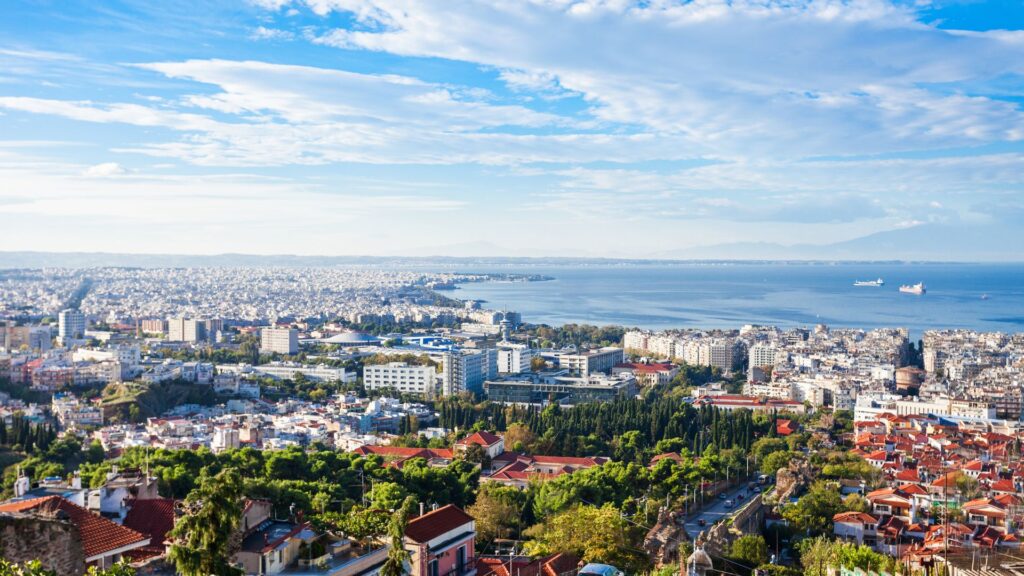
Meanwhile, as of July 1, the State has gradually introduced a stricter regulatory framework governing the short-term rental market in Thessaloniki.
At the same time, the suspension of new registrations in the Short-Term Accommodation Property Registry is already in force in the first three municipal districts of the Municipality of Athens, namely the areas where short-term rental activity had expanded most intensively in recent years. The measure applies to the Historic Centre, Plaka, Monastiraki, Thissio, Koukaki, Metaxourgeio, Kolonaki, Exarchia, Neos Kosmos, Pangrati, and neighboring areas. A corresponding suspension is now also in force in Thessaloniki’s 1st Municipal Community, where the largest concentration of Airbnb-type accommodations is located.
One of the most significant changes also concerns property transfers in the areas where the suspension of new short-term rental registrations applies. If a property that is currently operating legally as an Airbnb is sold or transferred through a parental gift or donation, the new owner will not be able to continue the activity, as they will not be entitled to a new registration in the Short-Term Accommodation Property Registry. The only exception concerns inheritance, where heirs retain the right to continue the short-term rental activity.
The Airbnb potential has been incorporated into the value of many properties
These changes are being closely monitored by the market, as in recent years the ability to utilize an apartment through short-term rentals has become embedded in the market value of many properties.
Today, an apartment in Koukaki, Monastiraki, Metaxourgeio, Neos Kosmos, or the historic center of Thessaloniki is no longer valued solely on the basis of its location, size, or age. A significant part of its value is also linked to its ability to generate income through short-term rentals.
It is no coincidence that the language of the market has also changed. Terms such as “investment property,” “Airbnb-ready,” “high yield,” “fully furnished,” and “ready for immediate operation” now appear systematically in property listings, reflecting the shift in focus from the home itself to its investment return.
Family home rents remain at historically high levels
Within this environment, data for family homes ranging from 70 to 110 square meters show that asking rents continue to move upward, although no longer at the pace recorded in previous years.
In the Municipality of Athens, the average asking rent increased from €830 at the beginning of 2023 to €980 in the first quarter of 2026, now approaching the psychological threshold of €1,000.
In the southern suburbs, Glyfada and the Municipality of Vari–Voula–Vouliagmeni continue to record the highest asking rents in Attica, with average rents of €1,320 and €1,340 respectively. However, in both of these markets, the sharp increases have essentially come to a halt, with prices remaining almost unchanged over the past twelve months.
A similar picture is evident in Palaio Faliro, where rents have now consistently exceeded €1,000, while in Piraeus, Marousi, and Kallithea the market continues to record further increases, but at a significantly slower pace than in 2023.
A market searching for its new equilibrium
The first quarter of 2026 confirms that the housing market is entering a different phase. High rents continue to support residential property yields, but the period of explosive price increases appears to be coming to an end.
The new landscape is now being shaped by a combination of factors: the limited housing supply, steady demand, the operation of the short-term rental market, new legislative interventions, and the need to strike a balance between tourism development and housing availability. Whether the market moves toward greater stability or enters a new cycle of price increases will depend primarily on the expansion of the available housing stock and the course of new residential investment.
