





Airbnb is introducing new restrictions on the personal information hosts can request from their guests. For Greek hosts, however, there is a practical question: how will they collect the information they need for their declaration to the AADE?
The new policy, which applies to bookings from November 20, 2026, provides an exception when the collection of information is required by law. However, it does not give hosts free rein to request any personal data they choose. At the same time, it affects PMS platforms, hospitality apps and certain self check-in processes that require guests to provide information or register before they are allowed to access the property.
What you can ask for and why
Airbnb restricts requests for personal data, such as email addresses, phone numbers and identification details or copies of identification documents. However, it maintains exceptions, including when the information is needed to comply with the law.
The host must explain in the listing, before the booking, what information will be requested and why. Hosts cannot collect more information than is necessary for the specific purpose.
Put simply, “I need your tax identification number (AFM) for the tax declaration of your stay” is different from “fill in all the fields in the app so we can give you the door code.”
The AADE still requires guest information
In Greece, the property manager needs certain information in order to submit the Short-Term Stay Declaration. Airbnb’s verification of the guest does not replace this obligation.
The official AADE manual, on printed page 22, states that for a Greek resident tenant, the AFM must be entered, while for a foreign tenant, the full name and passport number must be provided.
Be careful, however: a passport number is not the same as a photograph of the entire passport. This particular guidance does not require a copy to be submitted. It also refers to the tenant, not automatically to every person in the group.
The manual dates from 2018. For special cases and for completing the current application, consultation with an accountant is necessary.
It is not just about the check-in form
Many property managers do not request every piece of information themselves. The PMS, guest app or another tool they use may request it instead.
This does not mean they can ignore what is being collected. They need to look at the process from the customer’s perspective: which form opens, which fields are mandatory and what happens if the guest does not complete them.
For example, the same form may include the AFM for the AADE and an email address for future offers. The tax obligation does not automatically cover the collection of data for marketing purposes.
The same applies when an app requests more data than the property manager actually needs. The fact that a field exists in the software does not mean that the guest must necessarily complete it.
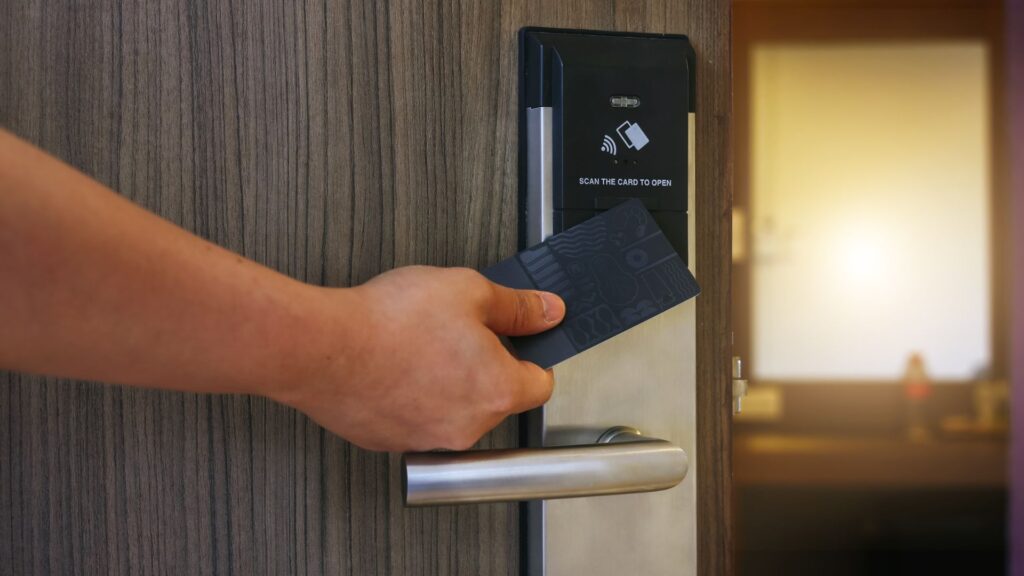
Can you continue using self check-in?
Yes. The change is not a general ban on smart locks or code-based entry.
The policy restricts the mandatory use of an external app or registration on another website in order to access the property, with specific exceptions. For keyless entry apps that require registration, it provides for an alternative method of access if requested by the guest.
So, the manager needs to ask their provider: can the guest open the door without downloading an app and creating an account? If not, what other option is available?
The answers depend on the tool and its settings. There is no need to panic or immediately change systems. What is needed is a review before a problem arises with a booking.
Airbnb protects data, but also keeps the customer closer to the platform
For the guest, there is a clear benefit: they do not have to share their personal information with every app used by the property.
However, there is also a business side. When the property manager has fewer opportunities to collect contact information, it becomes more difficult to build their own customer database and develop a relationship that continues after the stay. Communication remains more within Airbnb.
This strengthens the platform’s control over the customer relationship. This is an interpretation of the effect of the policy, not a stated intention of the company. Rental Scale-Up highlights this aspect and its implications for property managers and technology providers.
What to check before November 20
Open the form you send to guests and review every mandatory field. Ask why it is needed and whether it can be removed. Separate tax information from requests for marketing communications and make sure your listing explains in advance what information you request.
Then, test the entry process as if you were the customer.
The point is not to stop collecting information. It is to ask only for what you really need, explain why you need it and avoid linking access to the property to unnecessary requirements.