


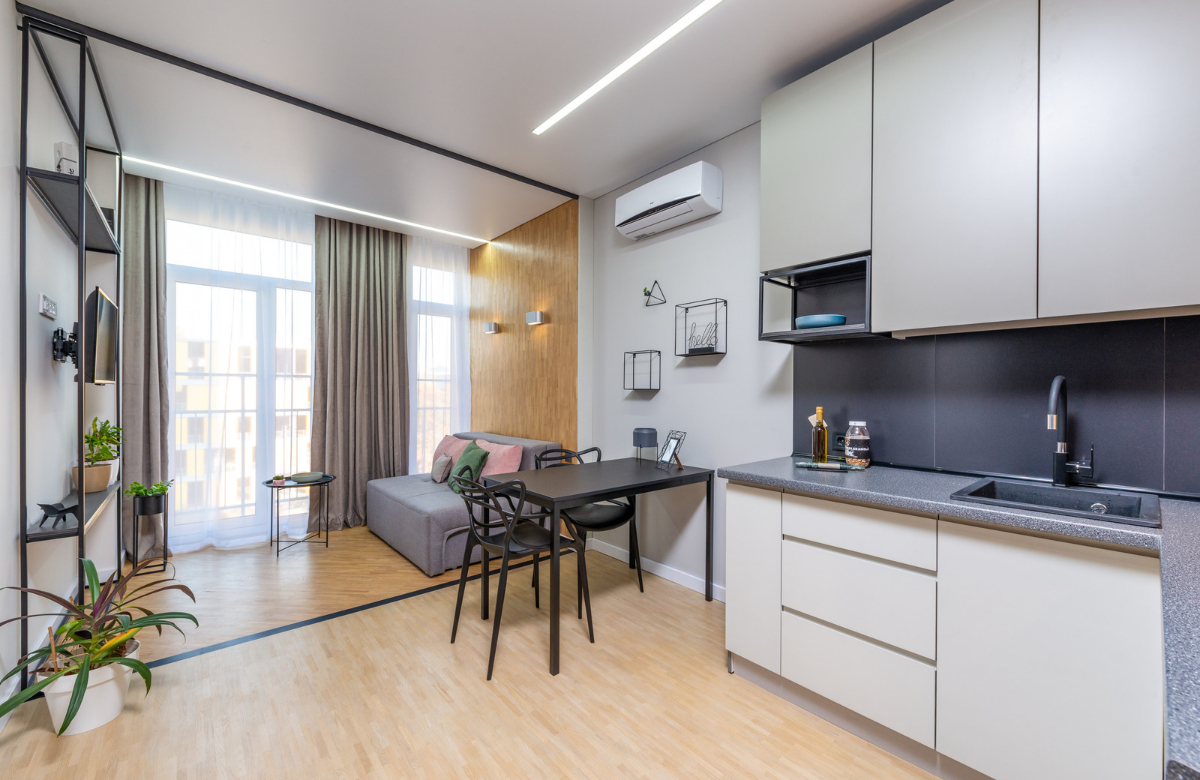

Short-term rentals remain a significant part of Greece’s tourism economy, continuing to grow despite tighter regulation and restrictions on new property registrations in certain areas. Figures presented in GBR Consulting’s latest analysis of Greek tourism highlight the scale of the sector and its growing role in the accommodation market.
According to the Independent Authority for Public Revenue (AADE), declared income from short-term rentals reached approximately €974 million in 2025. This is equivalent to around 8% of Greek hotels’ estimated annual turnover of €12.5 billion, as reported by the Hellenic Chamber of Hotels.
As GBR Consulting points out, this percentage would be higher if the comparison were limited to hotel room revenue rather than total hotel turnover.
The figures underline the economic footprint of short-term rentals, which have become a substantial and distinct segment of Greece’s accommodation market.
Platform bookings generated 8.65 million rental days
Data from the Hellenic Statistical Authority (ELSTAT) also point to continued growth. Its experimental statistics on short-term rentals booked through digital platforms recorded a total of 8.65 million rental days in 2025, up 4.7% from 2024.
The breakdown of demand is particularly revealing: visitors residing outside Greece accounted for 84.8% of all rental days. This highlights the sector’s strong international customer base and its close connection to inbound tourism.
Meanwhile, according to ELSTAT data, approximately 203,000 Property Registration Numbers (AMA) were recorded in Greece’s Short-Term Stay Property Registry as of March 2026. Registration does not necessarily mean that a property is actively available for rent, while many properties have more than one AMA. According to AADE figures, 117,604 Property Registration Numbers (AMA) were associated with declared short-term rental income in 2025. Overall, supply has expanded in recent years.
However, GBR Consulting notes that tighter regulation and restrictions on new registrations in certain areas could slow the growth of supply.
More visitors, but slower growth for hotels
The growth of short-term rentals takes on added significance when viewed against the broader performance of Greek tourism.
According to the Bank of Greece, inbound traveller numbers rose by 10% between January and August 2026, while travel receipts excluding cruises increased by 9.7%.
However, the rise in international visitor numbers did not translate into comparable growth in hotel demand. International guest arrivals at hotels increased by just 1.6%, while overnight stays rose by 1.2% over the same period.
Meanwhile, short-stay accommodation continued to report growth. According to ELSTAT, international guest arrivals in this accommodation category increased by 4.7%, while overnight stays rose by 4.4% in the period to August 2026.
Source markets follow different paths
GBR Consulting’s analysis also reveals considerable differences between visitor source markets.
Italy stood out, with arrivals rising by 22.1% and travel receipts increasing by 31.7%. Germany also delivered growth, with arrivals up 8.1% and receipts rising by 7.2%.
The French market, by contrast, declined: arrivals fell by 5.4% and receipts dropped by 8.1%. From the United States, travel receipts increased by 21% despite a 1.5% fall in arrivals, alongside a 22.8% rise in average spending per trip.
International passenger traffic at the country’s 25 airports increased by 4.8% in the period to September. When arrivals by Greek residents at Athens airport are excluded, the increase stands at approximately 2.9%.
Overall, the analysis points to continued growth in Greek tourism, with short-term rentals maintaining their momentum. With almost €1 billion in declared income, 8.65 million rental days and more than 203,000 registered properties, the sector has an established, measurable economic footprint. Its future performance will depend on both demand and the evolving regulatory environment.
