




American travelers appear more cautious about their spending in August 2026, according to the new State of the American Traveler survey by Future Partners. At the same time, actual travel habits remain relatively stable, although decisions are increasingly being made closer to the departure date, with road trips gaining ground over air travel.
More cautious sentiment and lower budgets
The percentage of travelers who said their household is financially better off than a year ago fell to 34.0%, from 35.6% in July. In contrast, the share of those who said they are worse off increased to 25.2%, from 23.7% one month earlier.
Caution was also reflected in travel spending. Only 34.3% said it was a good time to spend on leisure, down from 37.7% in July, while 56.9% described leisure travel as a high spending priority for the next three months, down from 61.2% previously.
The average annual budget for leisure travel fell to $5,340, from $6,022 in June and $5,840 during the same period in 2025. The survey also shows major differences by income category: those reporting annual incomes below $49,000 reported an average budget of $1,940, while among those earning more than $200,000, the average budget reached $12,263.
Bookings are being made closer to departure
Although willingness to spend declined, recent travel activity remained stable. More than half of American travelers, 56.2%, said they had taken at least one overnight leisure trip in the past month, unchanged from July and higher than the 54.1% recorded a year earlier.
However, the planning horizon is getting shorter. Nearly one in four, 24.6%, said they typically begin planning a one-week domestic trip 1 to 4 weeks before departure. In July, the figure was 22.7%, while in February it was 17.6%. The average planning time stood at 10.2 weeks.
The same pattern is visible in near-term travel plans: in June, 33.9% said they intended to travel in August, but in August only 29.5% reported plans for the same month. This suggests that some travelers are postponing their decisions rather than fully canceling their plans.
The car is gaining ground, while fuel costs remain a barrier
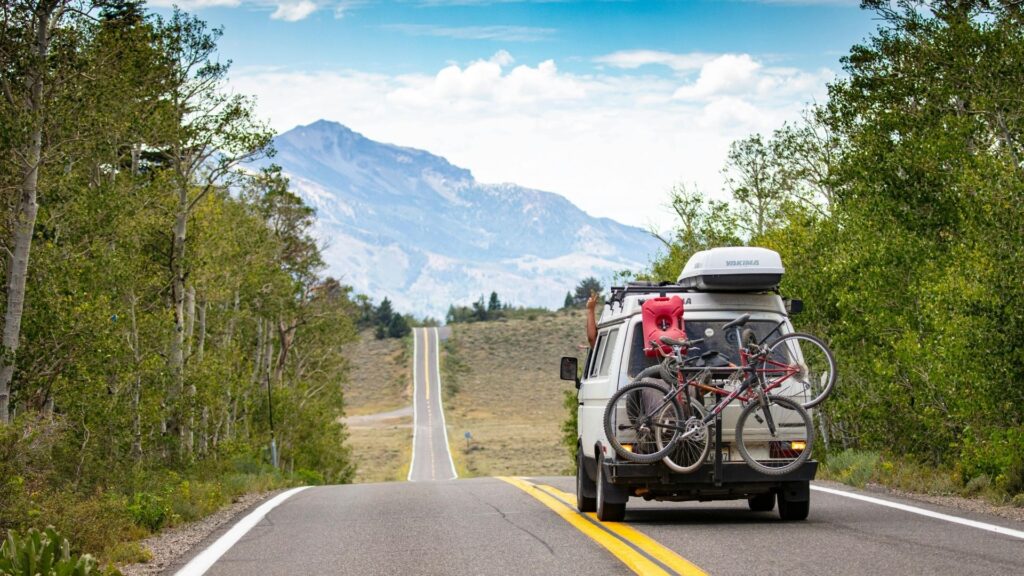
The survey records a clear shift toward road trips. Air travel remains the preferred option for 39.0% of travelers, down from 42.8% in July and 47.7% in April. By contrast, preference for road trips reached 35.1%, up from 26.3% in April.
The shift is more pronounced among lower-income travelers and residents of rural areas. Nearly half, 49.9%, of those reporting incomes below $49,000 prefer traveling by car, while among travelers earning $200,000 or more the figure falls to 12.2%. In rural areas, 53.7% said they prefer road trips.
At the same time, gasoline is emerging as a barrier. Some 32.0% cited high fuel prices as a reason they did not travel as much as they would have liked during the previous six months, up from 17.0% a year earlier. Overall, 36.1% said travel is too expensive, while 27.3% cited airfare as a barrier.
Technology is changing the way trips are planned
Alongside the shift in booking patterns, the way travelers research trips is also changing. 30.6% of travelers said they had used AI tools to plan or prepare for a trip in the past 12 months, up from 23.9% a year earlier.
YouTube was the most-used social media platform for travel planning, at 34.9%, followed by Facebook at 31.5%, Instagram at 27.8% and TikTok at 19.9%. Official destination websites remain part of the research process for 23.6% of travelers, while searches through websites found by search engines fell to 32.7%, from 34.8% a year earlier.
What this means for the hospitality market
For hotels, short-term rentals and hospitality professionals, the message from the survey is that demand is not disappearing, but is becoming more cost-sensitive and more short-term in terms of booking horizons. Travelers are still taking trips, but they are making decisions later and comparing their options more carefully.
The survey itself also shows that restrictions do not come only from work schedules, as expense-related barriers now outweigh work-related constraints. Cost remains the main factor holding back additional travel.
