



European tourism is entering a new era, where travellers are no longer simply looking for an attractive destination, but for a complete experience that combines authenticity, sustainability and meaningful interaction with local communities. This shift is creating new realities for tourism businesses and destinations alike, which are now required to adapt to the expectations of an increasingly conscious audience.
According to the latest study by the European Travel Commission (ETC), carried out with the contribution of MINDHAUS, today’s European traveller places greater value on the quality of the experience than on mass tourism. This trend reflects a broader social transition towards more responsible choices, both in terms of environmental awareness and respect for the local communities that welcome millions of visitors every year.
The “Responsible traveller” is shaping new tourism trends
The study identifies five key traveller profiles that are increasingly defining demand across the European tourism market. These include visitors who deliberately choose less crowded destinations, digital nomads who combine work and travel, holidaymakers seeking comfort and convenience, as well as travellers with a heightened sense of environmental responsibility.
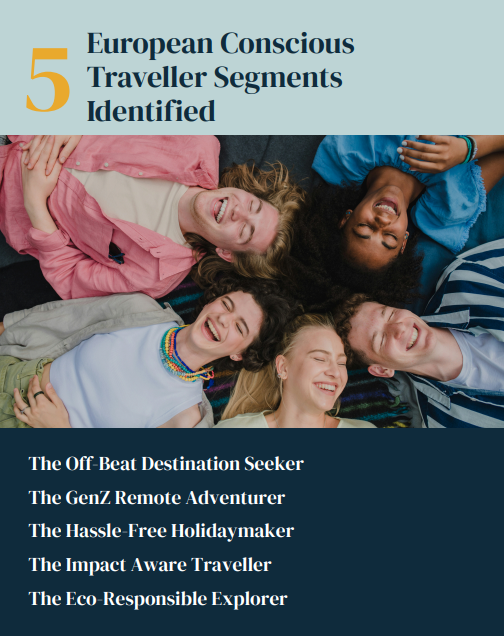
Perhaps the most significant finding is that responsible tourism is no longer a niche preference. On the contrary, it is rapidly becoming a mainstream trend. According to the survey, 64% of Europeans have already adopted at least one form of responsible travel behaviour, demonstrating that these emerging values are directly influencing the way holidays are planned and experienced.
At the same time, Europeans’ intention to travel remains particularly strong. Eight out of ten respondents are planning at least one trip within Europe, while four out of ten are willing to spend more than €1,500 on their next travel experience.
Sustainable tourism and the move away from overtourism
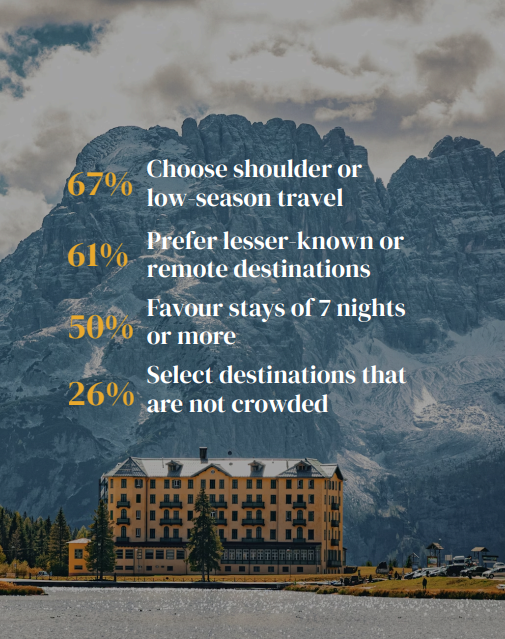
One of the study’s most important conclusions concerns travellers’ gradual shift away from overcrowded destinations. More than half of respondents (51%) say they prefer less popular locations, while an additional 10% actively choose more remote areas in search of tranquillity and authentic experiences.
This trend is particularly significant for countries such as Greece, where popular destinations often face considerable pressure during the peak tourism season. The growing interest in alternative destinations could help distribute visitor flows more evenly while supporting local economies that have traditionally remained outside the mainstream tourism map.
At the same time, European travellers appear to be moving away from the concept of short getaways. Half of those surveyed prefer stays longer than seven nights, while 67% choose to travel during the shoulder or low season, contributing to the extension of the tourism period and a more balanced distribution of demand.
Europeans’ new holiday preferences
 Although “sun and sea” holidays remain the most popular option, accounting for 22% of preferences, alternative forms of tourism continue to gain momentum.
City breaks, cultural experiences and nature-based activities each attract 15% of respondents, while wellness tourism appeals to 10% of travellers. The growing demand for experiences that combine relaxation, culture and personal wellbeing appears to be one of the defining characteristics of the new travel model.
When it comes to destination selection, safety remains the most important criterion for 45% of Europeans. Reliable weather conditions follow at 35%, attractive offers at 30%, and the hospitality of local residents at 28%, highlighting the increasing importance of authentic connections with local communities.
What this new trend means for Greece and Greek tourism
The study clearly demonstrates that the future of European tourism is closely linked to sustainability and the quality of the overall travel experience. For Greece, where tourism remains one of the country’s most important economic pillars, these findings create both significant opportunities and new challenges.
Promoting lesser-known destinations, strengthening cultural and nature-based tourism, and attracting visitors beyond the traditional high season could become key drivers of future growth.
As MINDHAUS also points out, European tourism is evolving not only in terms of trends but also in terms of values. Today’s traveller is looking for meaningful experiences, a deeper connection with the destination, and choices that respect both the environment and local communities. For destinations that successfully adapt to these changing expectations, the future looks particularly promising.
