


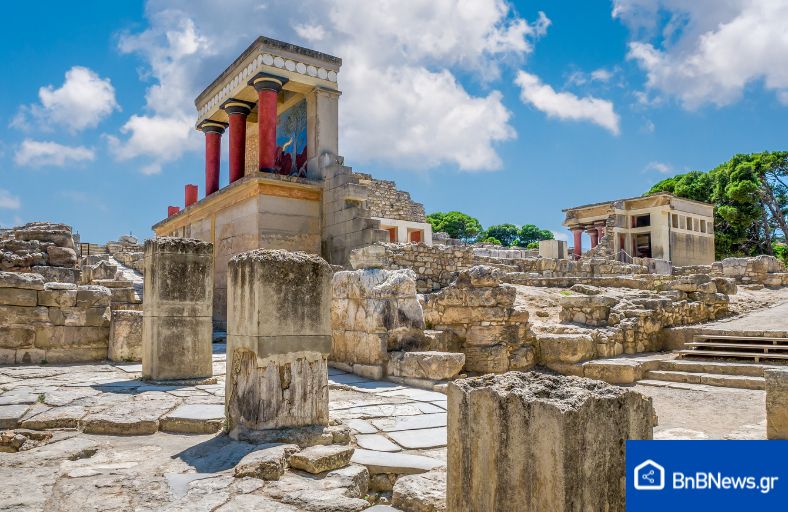

Crete is “reintroducing” itself through its cultural heritage, implementing a strategy that focuses on connecting the Minoan Palatial Centers with archaeological sites in the wider regions. The Region of Crete is moving forward with an ambitious action plan under the framework of the Integrated Territorial Investment (ITI), aiming to improve accessibility, highlight cultural identity, and strengthen sustainable tourism.
At the core of the plan are historic sites such as Knossos, Phaistos, and Malia, which will be connected through new routes and roadworks with a total length of 10 kilometers. The works include the road bypass of the Axos settlement, the improvement of the Venizeleio-Knossos junction, and the creation of accessible paths for people with disabilities.
Cultural preservation is reinforced through projects such as architectural lighting, signage, and the restoration of Byzantine and Venetian monuments. At the same time, inactive historic buildings are being brought back to life based on the principles of Bauhaus: sustainability, aesthetics, and social inclusion.
The initiative also extends to environmental awareness, with the creation of hiking trail networks within UNESCO areas, as well as the development of cycling and climbing infrastructure that connects culture with nature.
With this plan, Crete is not simply showcasing its past — it is actively integrating it into the contemporary tourism experience, building a sustainable and resilient development model grounded in authenticity and quality.
