


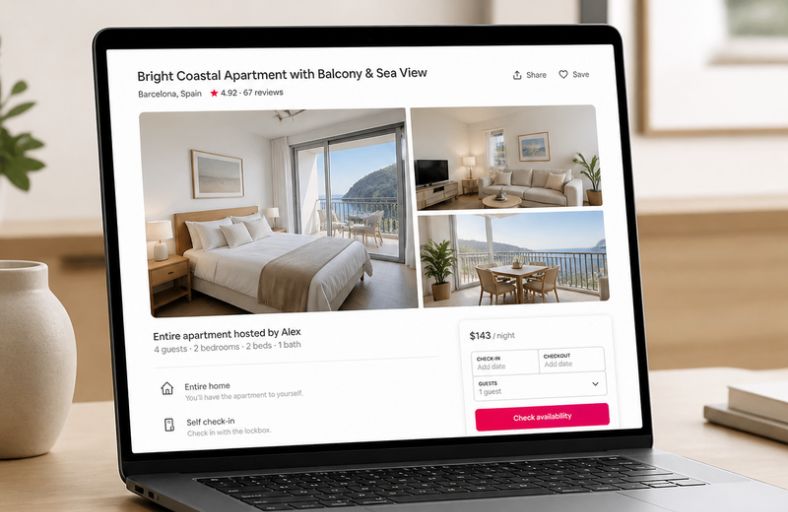

An empty calendar often prompts a familiar response: lower the nightly rate. But Airbnb listing optimisation deserves a place in that decision. Before offering another discount, hosts should check whether guests can find their property, understand what it offers and feel confident enough to book.
An analysis by PriceLabs of more than 10,000 listings across nine markets, including Barcelona, Chicago, Melbourne and Dubai, highlights the issue. According to the company, only 12% had strong, consistent content. High-quality listings were 35% more likely to outperform their local market.
That figure does not mean updating a listing will increase revenue by 35%. It describes an association with outperformance, rather than proving that better content alone caused the difference.
Airbnb listing optimisation: Where the gaps appear
PriceLabs reported weak or poorly ordered photos in 70% of the listings analysed. Unclear or incomplete descriptions affected 54%, while the same proportion showed inconsistencies between photos, amenities and text.
For a prospective guest, these gaps can leave basic questions unanswered. Does a city apartment have a separate bedroom? Is the terrace private? Does reaching a coastal property involve steps? Is parking on site or somewhere nearby?
A description packed with attractive adjectives may still fail to answer those questions. Clear photographs and specific information make the property easier to assess.
Airbnb itself identifies quality, popularity, price and location as major influences on search results. It says strong photos can improve engagement, while a comprehensive description helps guests develop the confidence to book. Accurately recording amenities can also improve visibility when travellers use relevant search filters.
How PriceLabs’ Listing Optimizer fits in
PriceLabs addresses these issues through Listing Optimizer, an AI-assisted tool that assesses listing content, images, amenities and guest experience factors. It assigns grades from A to D and provides recommendations, alongside comparisons with nearby high-performing properties and ranking trends over time.
For property managers overseeing multiple homes, its practical appeal is the ability to identify presentation gaps across a portfolio and prioritise work.
However, a third-party assessment should be treated as guidance. PriceLabs acknowledges that Airbnb does not disclose the precise weighting of its ranking algorithm. Its recommendations draw on publicly available listing data and observed patterns.
What hosts should check before another discount
Start with the first image a guest sees. Does it communicate the property’s main selling point? Then review the title, room photographs, description and amenities together. They should tell the same story and reflect the property as it is today.
For European hosts welcoming international guests, plain language is particularly useful. Explain sleeping arrangements, access and facilities clearly rather than relying on broad claims such as “perfect location” or “ideal for everyone”.
Pricing and booking settings still need attention. Airbnb says competitive total prices, calendar availability and more flexible stay requirements can help listings appear in relevant searches.
The practical lesson is to review presentation alongside price. Fixing an unclear listing gives guests a better basis for choosing the property—and gives hosts a stronger basis for deciding whether a discount is really needed.
