




Correction and clarification from BnBNews
In a previous publication regarding Airbnb’s new fee structure, we reported—incorrectly—that the platform was completely eliminating the “split-fee” model for all hosts.
In reality, the changes only apply to those who use Property Management Software (PMS), as clarified by the Airbnb Help Center. Hosts who do not use PMS are not affected and will continue with the split-fee structure.
Below is the corrected analysis based on the official data.
Airbnb’s new fee structure
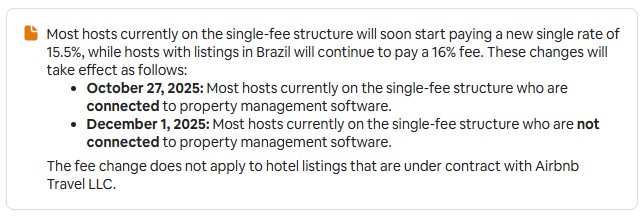
Airbnb is introducing a single fee of 15.5% for hosts who use Property Management Software (PMS), replacing the previous model where the fee was split between the host and the guest (“split-fee”).
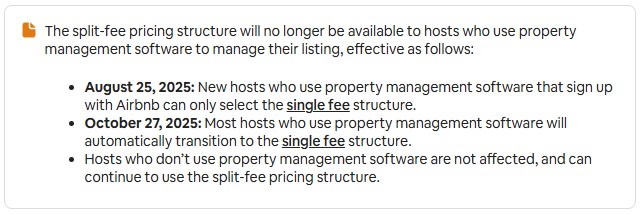
According to the official update from the company:
- Effective October 27, 2025, most PMS-using hosts already on the single-fee model will automatically transition to the new 15.5% rate.
- Effective December 1, 2025, the same will apply to hosts using the single-fee structure but who are not connected to a PMS.
- Hosts who do not use management software and still apply the split-fee structure (with a host fee of approximately 3% and the remainder paid by the guest) are not affected for now.
With the new model, the entire fee is deducted from the amount received by the owner, while the guest sees a more “clean” final price without additional Airbnb service charges.
An example cited by Forbes:
If a host previously charged $100 per night and kept about $97 after the host fee, while the guest paid around $115, under the new model the host will need to raise their price to $115. After deducting the 15.5% fee, their net earnings remain approximately the same—provided that the price and fees have been correctly readjusted.
Pressure and opportunity
This change comes at a time when short-term rental regulations are tightening worldwide.
In London, unlicensed activity is capped at 90 nights per year. In Paris, non-registered listings face fines, while in Edinburgh, a special license is now required under the Civic Government Act.
For professional managers, compliance and technological adaptation have become just as crucial as bookings themselves.
How hosts can adapt
Adjust pricing – A 10–15% rate increase will offset the new fee without significantly discouraging guests.
Transparency with guests – Explaining the change and being upfront about new costs helps maintain positive reviews.
Leverage technology – Dynamic pricing and automation tools are now essential, much like in the airline and hotel industries.
Diversify channels – Listing on Vrbo, Booking.com, or direct booking websites reduces dependency on a single platform.
A more mature ecosystem
Airbnb’s decision is more than a technical update, it’s a sign of the industry’s maturation, Forbes notes.
Short-term rentals are evolving from a “side hustle” into a full-fledged professional sector, shaped by regulation, investment, and expectations similar to those of the hotel market.
Those managers who invest in professionalism, automation, and compliance will be the ones leading in this new landscape.
