



The Mayor of Athens, Haris Doukas, announced the Athens Municipality’s intention to extend the freeze on new licenses for short-term rentals to areas beyond the three municipal districts of the capital, during his intervention on the housing panel at the 10th Delphi Economic Forum.
As he stated, an observatory has already been established, which monitors short-term rental data in Athens in real-time. Based on this data, seven neighborhoods surrounding the historical center – including Koukaki and Mets – are nearing saturation, a fact that brings the need for new measures to the forefront.
“We are seriously considering banning new Airbnb properties in these areas to protect residents’ access to affordable housing,” he characteristically mentioned, emphasizing that the problem with rental prices has worsened, with increases reaching 90% in the last seven years.
Mr. Doukas also stressed the need to strengthen the housing stock, utilize abandoned buildings – many of which belong to the public sector – as well as institutional interventions that will allow the activation of the tens of thousands of vacant houses recorded in Athens.
2.3 million vacant residences
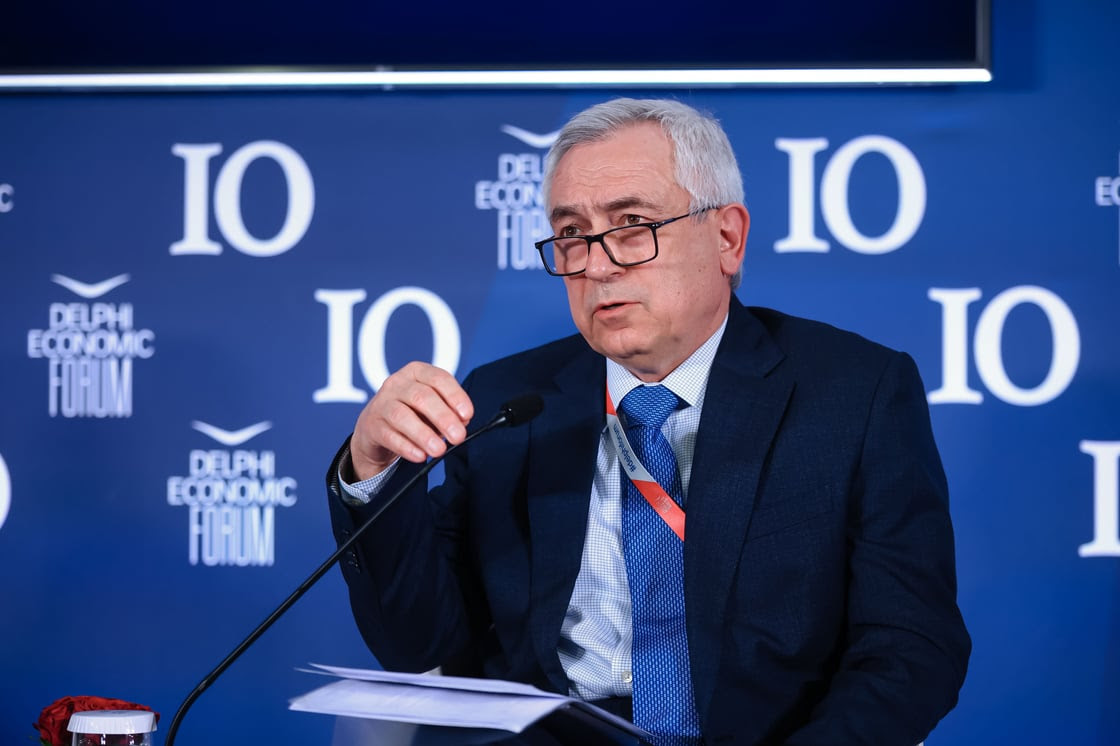 On the panel, Giorgos Doukidis, Professor of Business Administration at the Athens University of Economics and Business, shared the findings from his five-year ongoing research on short-term rentals. According to the research’s findings so far, short-term rentals contribute to 5% of GDP, support approximately 100,000 jobs, and account for 30% of overnight stays.
However, 95% of providers are individuals, with the average monthly income being just over 600 euros. “There are approximately 200,000 short-term rentals, which correspond to only 3% of the residences in Greece,” he continued.
He made special mention of vacant houses, with Greece having the 3rd highest percentage, as 2.3 million residences are vacant. The shift of inflation towards urban centers, the habit of having holiday homes, and the existence of many properties in the hands of banks explain part of this problem. In Attica, in fact, there are 500,000 vacant residences, which represent 24% of the total. Specifically in Athens, the percentage of empty houses is estimated at 27%, or 117,000 residences. Of these, only 4,500 are exclusively short-term rentals.
Airbnb: “Private individuals should be exempted”
 Valentina Reino, Head of Public Policy & Campaign Southern Europe, Airbnb, referred to the regulation observed in many regions of Europe. “Over-regulation risks deviating from its goal, while harming local residents who occasionally rent through Airbnb. Although disproportionate measures in cities like New York or Barcelona have failed to address local housing issues, we recognize the challenges of overtourism in popular tourist destinations such as the center of Athens”.
“We believe that an approach based on a temporary freeze in the most touristy neighborhoods of Athens, which will be reviewed based on data, is moving in the right direction. However, ordinary citizens who occasionally rent out a room or up to 2 properties simply to make ends meet should be exempt from this measure,” she added.
Social housing
The intervention of Robert Kingsmill, Co-Founder & Chairman & Non-Executive Board Member – Chairman, Group Investment Committee, Raven Housing Trust, Resolute Group, who focused on the issue of social housing, was also of interest. “In London, we have 500,000 low-rent social housing units. However, some of the housing is old. We have the same problems that are observed in Greece,” he pointed out, among other things.
Regarding the management of social housing, he explained that it is done through a combination of local authorities and housing associations, which regulate the way these homes are used. The government provides funding, and the associations oversee the usage, decide who will reside there, check tenants, and are also responsible for the care of the properties. Finally, regarding the utilization of vacant housing, he emphasized the importance of good planning, which is a necessary prerequisite for a good outcome.
The discussion was moderated by Symela Touchtidou, Journalist at Euronews Greece.
