


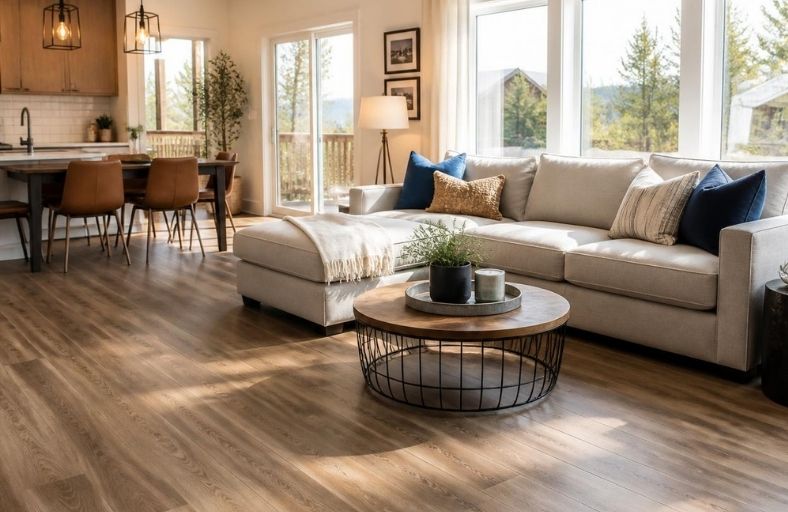

Choosing the right flooring for an Airbnb property is not about aesthetics or the owner’s personal preferences, but is a critical business decision. In a short-term rental property, the floor is subjected to much greater wear and tear than in an ordinary home. Suitcases with wheels, sand, wet shoes, frequent mopping, moving furniture, children and pets are everyday challenges. Therefore, the right flooring should combine durability, easy cleaning, moisture resistance and an appearance that remains contemporary over time.
Guests may never comment on the installation method or the quality of the core, but they will immediately notice stains, swelling, noise and wear in hallways from the first booking photos.
Flooring materials and how they perform
The choice should not be based solely on the price per square meter. Durability, water resistance, ease of cleaning, replacement costs and aesthetics should all be considered together.
Luxury Vinyl: The practical choice
Luxury Vinyl Plank (LVP) and Luxury Vinyl Tile (LVT) are among the most practical solutions for an Airbnb. They offer the appearance of wood or stone, are easy to clean and have high moisture resistance, which is particularly useful in properties with frequent bookings.
SPC (Stone Polymer Composite): It features a rigid and dense core, providing stability and resistance to impacts and dents. It is particularly suitable for busy urban properties.
WPC (Wood Polymer Composite): It has a more flexible and comfortable feel underfoot compared with more rigid constructions and can be an option for spaces where comfort and sound insulation are more important.
Tiles: The durable choice
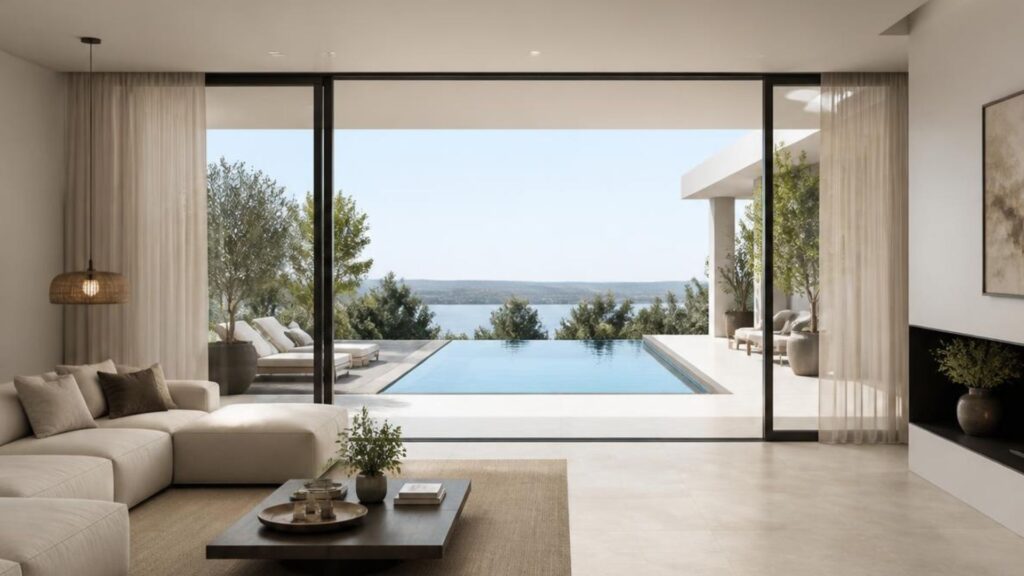
Porcelain tiles have very low water absorption and are a practical solution for areas with significant exposure to moisture. They are particularly suitable for seaside Airbnb properties and properties with pools, where water and sand increase everyday wear and tear. Ceramic tiles can also be suitable, depending on the product specifications and the use for which they are intended.
Laminate: The economical choice
Laminate offers the appearance of wood at a competitive price, and modern products have good scratch resistance. However, moisture resistance varies significantly between product ranges, so hosts should check the product specifications before choosing it for areas with frequent exposure to water.
Engineered Hardwood: For premium properties
In villas and high-end properties, engineered wood offers a natural appearance, warmth and elegance. It is more stable than solid wood, but requires greater care in use and maintenance, as it can be damaged by luggage and pets.
Read also- How to choose the right kitchen cabinet materials for Airbnb
Choosing flooring based on the location of the Airbnb
The property’s location largely determines the environmental challenges the flooring has to withstand.
Seaside properties and islands
In islands and seaside villas, flooring has to withstand moisture, salt, sand and wet swimsuits or towels. LVP/SPC and porcelain tiles are practical choices, as they are moisture-resistant and easy to clean.
Urban properties
In Airbnb apartments, important factors include sound insulation, resistance to everyday wear and tear and quick cleaning. LVP with a suitable underlayment or high-durability laminate can meet the needs of a busy urban property, while natural wood tones also work well in photographs.
Mountain properties
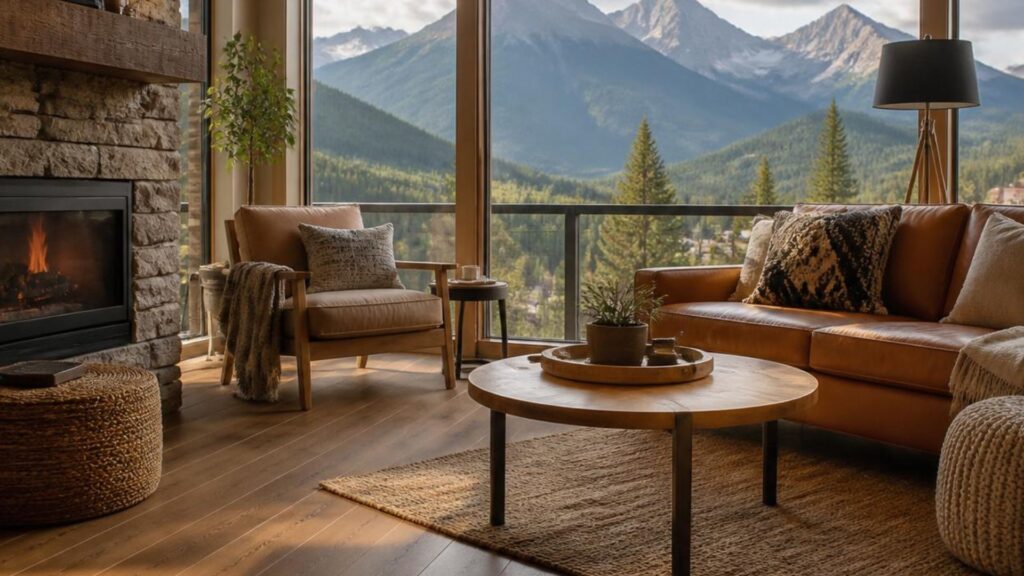
In mountain Airbnb properties, warmth, comfort and resistance to everyday use are priorities, particularly during winter. Engineered wood offers an authentic wood appearance, while LVT with a wood look is an easier-to-maintain alternative. Natural tones, such as oak, enhance the feeling of hospitality.
Beyond price: What the host should consider
Price per square meter should not be the only criterion. Before purchasing, hosts should consider resistance to moisture, scratches and wear, slip resistance where required, cleaning requirements and availability of replacement materials.
It is also important to consider how maintenance will be carried out. A floor that requires special cleaning products or difficult repairs can increase the operating costs of the property.
It is useful to keep a few extra tiles or planks from the same batch. This way, future damage can be repaired locally without having to replace a larger section of the floor.
In terms of design, natural, warmer tones and matte finishes can be practical choices for an Airbnb, as they combine easily with different furniture styles and do not highlight certain minor signs of wear as strongly. The trend toward warmer, natural tones is particularly evident in flooring choices in 2026.
The right choice depends on the Airbnb
There is no single “best” flooring for every property. The right host does not choose flooring simply because it is attractive or affordable. The choice should be based on how the property operates, its environment and the cost it will create over time. The goal is flooring that looks attractive in photos, can be cleaned quickly and continues to meet the requirements of the property after many seasons.
