



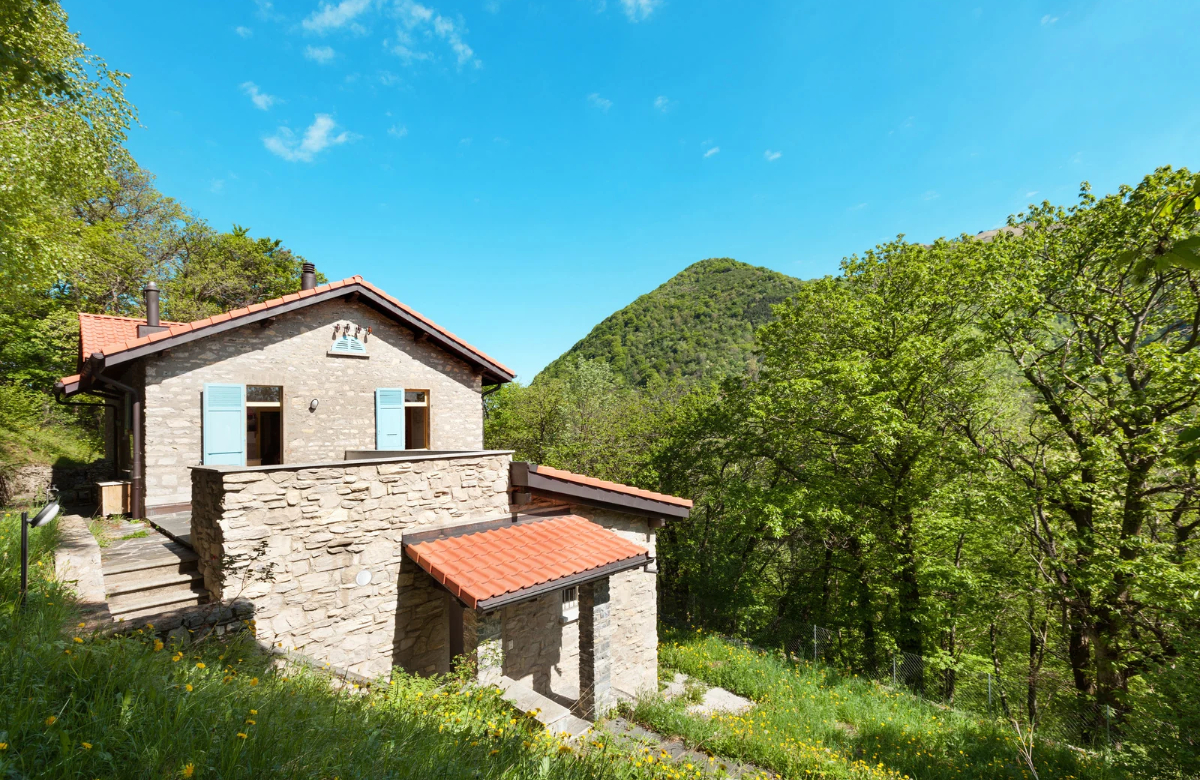

Short-term rentals in smaller destinations may offer opportunities for owners and property managers looking to expand beyond established tourism markets. A home in a village, a small town or a lesser-known coastal area can appeal to guests who are not necessarily searching for the next holiday hotspot. Before it becomes a business proposition, however, one basic question needs answering: who will book it, and why?
Official figures from Spain, Italy and Portugal show growth in markets outside major urban centres. They do not prove that travellers are abandoning cities, or that restrictions on urban Airbnb properties automatically redirect bookings to the countryside. They do, however, highlight individual markets worth examining more closely.
What the European figures show
In Spain, overnight stays in rural tourism accommodation increased by 2.7% in August 2026 compared with the same month in 2025. Nights booked by non-residents rose by 12.1%, while those booked by Spanish residents fell by 0.9%, according to the national statistics institute, INE.
In Italy, the Ministry of Tourism reported increases of 5.6% in arrivals and 4.4% in overnight stays in small municipalities between January and July 2026.
In Portugal, rural tourism and turismo de habitação accommodation recorded approximately 3.3 million overnight stays in 2025, up 6.9%. Nights booked by international visitors increased by 10.3%, although domestic travellers still accounted for 51.8% of the total.
These figures cover different periods and accommodation categories, not exclusively short-term rentals. They should therefore not be treated as a single measure of European market performance. They do, however, provide examples of growth beyond the major cities.
The first question is not how much the property costs
For a Greek property manager, a less established market may look attractive because it offers less competition or lower property purchase prices. Neither guarantees bookings.
The starting point should be the reason for the trip. Are visitors coming for hiking, the beach, food, an event or to see relatives? Can they combine their stay with visits to nearby destinations? Will they need a car, and how easy is the journey?
The answers help determine the target audience, likely length of stay and how the property should be presented. An attractive home is not enough if prospective guests cannot see what the area offers them.
Outside the city does not mean year-round demand
Growth outside urban centres does not eliminate seasonality.
Portugal provides a useful example: 42.9% of overnight stays in the accommodation categories examined took place between July and September, compared with 34.9% across the country’s tourist accommodation sector as a whole.
For short-term rentals in smaller destinations, this means annual projections cannot rely on strong August rates or high occupancy over a holiday weekend.
Weekdays, weekends and quieter months need separate assessments. Otherwise, a few successful weeks can mask a challenging full-year performance.
That calls for a different pricing strategy during periods of weaker demand, rather than an annual forecast built around peak-season rates.
Management costs can change the calculation
A property located far from a company’s existing portfolio creates a different set of operating needs.
Who will clean it after checkout? Who will deal with a late-night maintenance problem? Is there a local partner for linen and property inspections, or will staff need to travel from another area?
The more dispersed the properties, the more important the cost of each visit becomes. A two-night booking may leave a smaller margin than its price suggests if it involves lengthy journeys and more expensive servicing.
Before expanding, managers need reliable local partners and a realistic calculation of the operating cost per stay.
Check the area, not just the house
Choosing a lesser-known destination does not remove the need to check the rules.
Greece’s Special Spatial Framework for Tourism was published on August 7, 2026, in Government Gazette D 658. According to the Ministry of Environment and Energy, it includes both provisions that apply immediately and guidance for subsequent levels of urban planning. ypen.gov.gr
Anyone considering a purchase, renovation or change of use should have an engineer assess both the property and the rules applying to its location. It is not safe to assume that what is permitted in a neighbouring village also applies to the property under consideration.
The opportunity depends on the individual market
The European examples give operators a reason to look beyond the obvious destinations. They are not, however, an investment formula that works for every village or small town.
Short-term rentals in smaller destinations need a clear reason to visit, realistic demand forecasts and dependable local operations. For owners and managers, the right question is not simply, “Where is there less competition?” It is “Where can I offer a stay that guests want and deliver it profitably?”