




The Airbnb market in Greece demonstrated strong pricing power in the summer of 2026, as hosts and property managers raised their rates significantly without sacrificing occupancy. This led to double-digit growth in revenue per available rental night and placed Greece among Europe’s strongest-performing markets.
According to AirDNA’s latest monthly review, Greece’s average daily rate reached €195 between June and August 2026, up 11.8% from the previous summer.
Despite the increase in rates, occupancy remained virtually unchanged at 70.9%. This allowed almost the entire rate increase to flow through to revenue, with revenue per available rental night, or RevPAR, rising by 11.9% to €138.
The result is particularly significant for short-term rental professionals. In many European markets, higher rates were accompanied by lower occupancy, limiting the overall benefit for owners and property managers. In Greece, by contrast, the market absorbed higher prices without a meaningful decline in booked nights.
How Airbnb in Greece compares with Europe
Across Europe, the average daily rate increased by 7.8% over the summer to €157.16. Although this was a substantial rise, it was accompanied by a 1.4 percentage-point decline in occupancy, which fell to 66.9%.
As a result, European RevPAR increased by 5.5% to €105.19. This growth rate was less than half the 11.9% recorded in Greece.
The European market’s performance reflects a widening gap between supply and demand. Available listings increased by 1.7% to 4.19 million, while demand nights declined by 2% to 174.9 million. More properties were therefore competing for fewer booked nights, putting downward pressure on occupancy.
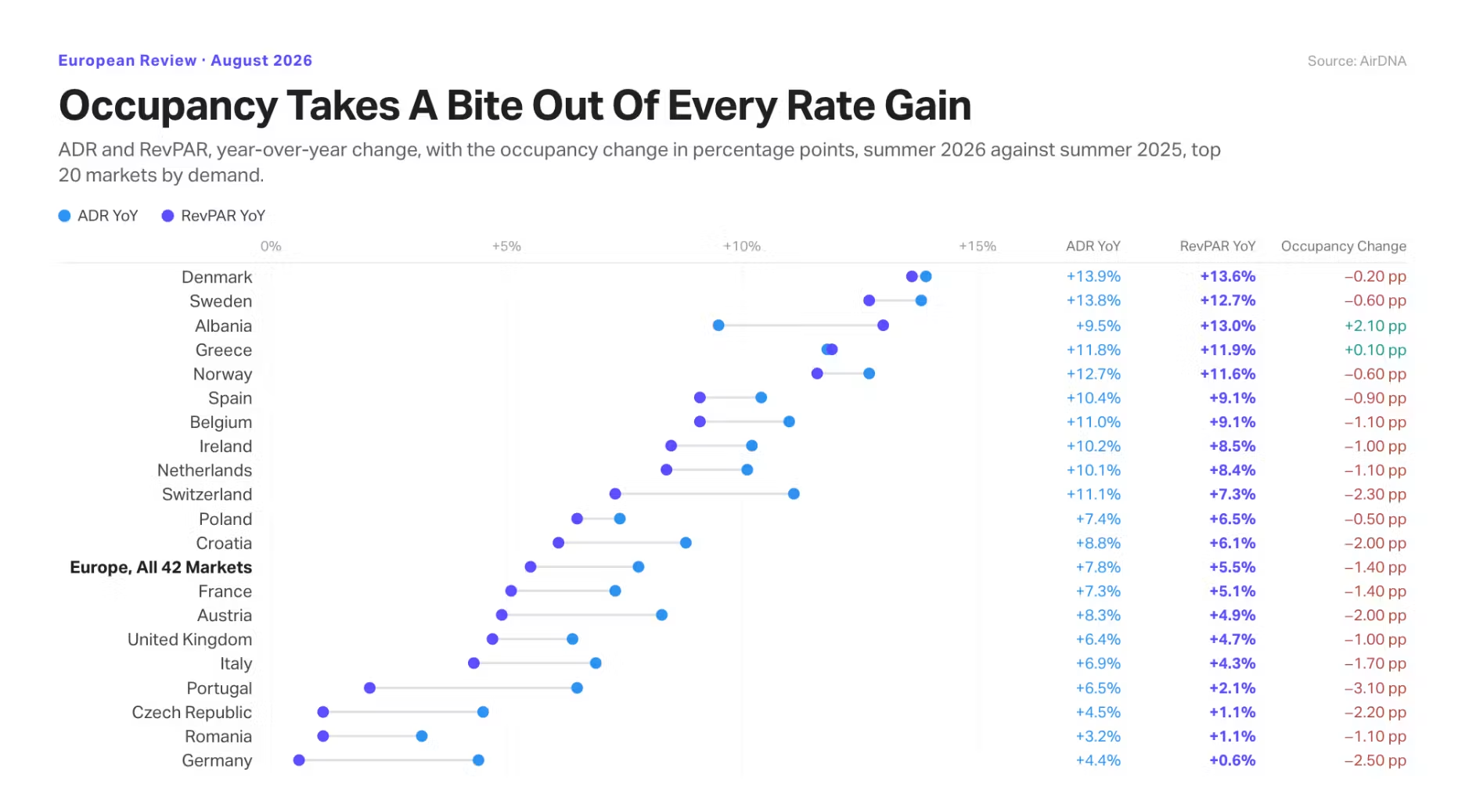
Of Europe’s 20 largest markets, Greece and Albania were the only two to avoid an occupancy decline over the summer. Occupancy remained virtually unchanged in Greece, while Albania recorded a 2.1 percentage-point increase.
The two markets achieved these results in different ways. In Greece, supply declined and revenue growth was primarily driven by higher rates. In Albania, by contrast, available listings increased by 9.4%, but demand grew even faster, rising by 19.7% and lifting occupancy in the process.
Average rates reached €202 in August
The Greek market maintained its momentum at the height of the summer season. In August, the average daily rate reached €202, representing a year-on-year increase of 10.9%.
RevPAR rose by 11% to €152, while occupancy once again remained virtually unchanged from the previous year.
The comparison with Europe makes Greece’s performance even more notable. Europe’s average daily rate reached €160.10 in August, up 7.5%. Occupancy, however, fell by 2.1 percentage points to 70.4%, limiting RevPAR growth to 4.3%, at €112.74.
In practice, Greek hosts and property managers not only charged more than the European average but also retained a larger share of the rate increase as additional revenue.
Available supply declined
Unlike Europe as a whole, Greece recorded a contraction in available supply. The country had an average of 160,615 available listings over the summer, down 2.1% year on year.
Greece was one of the few major European markets to report a decline in supply, alongside Spain, Croatia and Belgium. Spain recorded the sharpest contraction, with available listings falling by 10.7%, a development linked to the removal of non-compliant properties.
The combination of lower supply, higher rates and stable occupancy in Greece points to a more favourable balance between available accommodation and demand. However, nationwide data alone are not sufficient to prove that the decline in listings caused the increase in rates.
Performance may vary considerably between islands, coastal destinations and urban markets such as Athens and Thessaloniki. Similar differences may also exist depending on each property’s size, category, guest capacity and level of amenities.
What the data mean for pricing
For hosts, the key takeaway from the summer of 2026 is that the Greek market had room to support higher rates. The 11.8% increase in the average daily rate did not lead to lower occupancy, at least at an aggregate market level.
This does not mean, however, that the same increase can be applied across every property and every date. Greece’s nationwide average is shaped by its mix of destinations and property types, while stable overall occupancy may conceal significantly different results across individual markets.
To interpret the data correctly, hosts should compare their properties with their true competitive set: listings in the same area with a similar size, guest capacity and level of amenities. Booking pace is also important, as is whether a higher rate is accompanied by improving or declining occupancy.
A higher average daily rate delivers genuine value when it translates into stronger RevPAR. In Greece, that is precisely what happened during the summer of 2026.
A weaker outlook beyond the summer peak
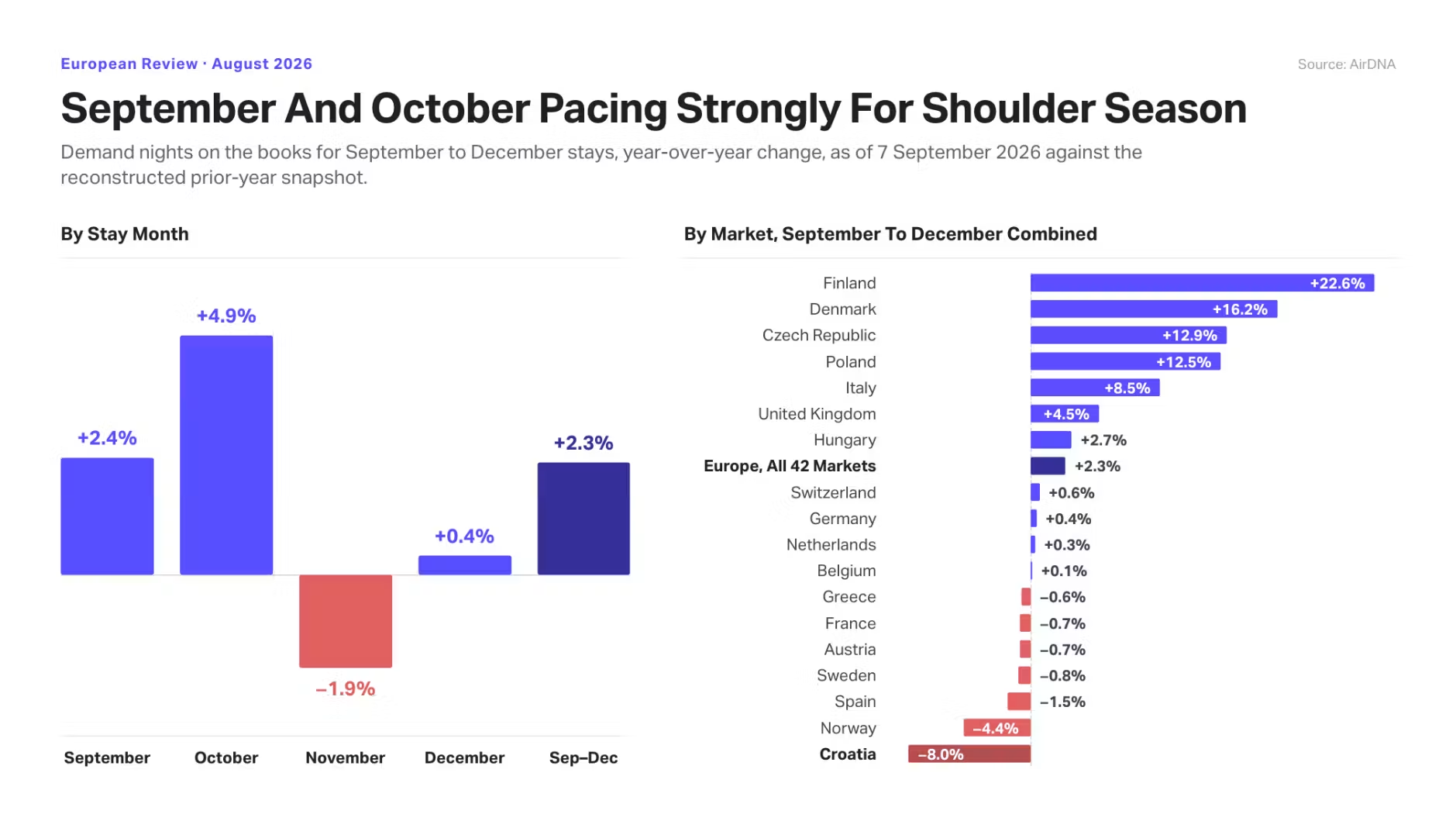
Bookings for the coming months are not yet showing the same momentum. For stays between September and December, the number of nights currently on the books in Greece is 0.6% lower than at the same point last year.
Across Europe, forward bookings for the same period are up 2.3%, with 31 of the 42 markets monitored by AirDNA in positive territory. Italy is ahead by 8.5% and the United Kingdom by 4.5%, while Greece, France, Spain, Germany and Austria are all tracking close to last year’s levels.
Greece’s shortfall remains small and could narrow, as November and December are still at an early stage in the booking cycle. Nevertheless, the figures indicate that the pricing power seen during the summer should not be taken for granted during lower-demand months.
For property managers, the challenge this autumn will be to align rates with booking pace, avoiding both premature discounting and the retention of peak-season prices on dates when demand does not support them. The summer showed that the Greek market can generate higher revenue. The next test is whether that performance can extend beyond the peak season.
