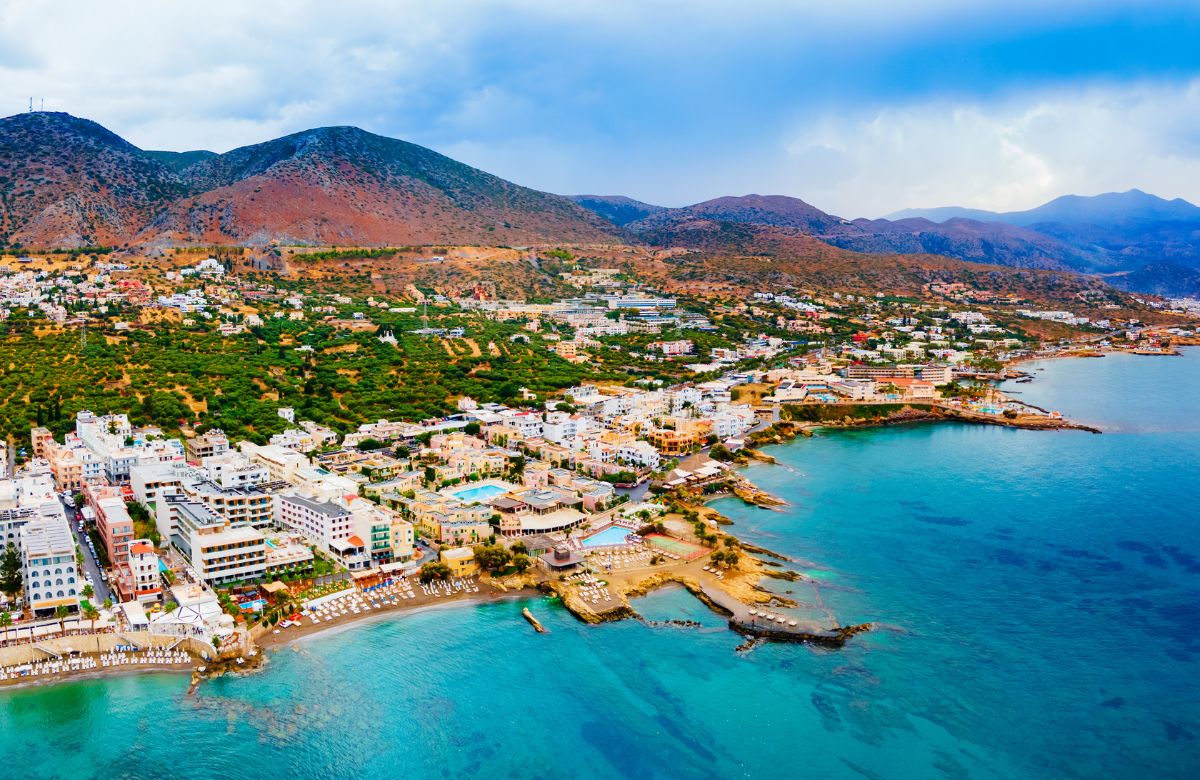

A sharp debate has emerged in Crete between the Crete Hoteliers Association and the Hersonissos Traders Association, following a letter sent by the island’s hoteliers to Prime Minister Kyriakos Mitsotakis calling for island-wide restrictions on short-term rentals.
In response, the Hersonissos traders offered a completely different perspective on the economic impact of short-term rentals—arguing that the real problem lies not with Airbnb but with the dominance of all-inclusive hotel models, which they say have drained life from local markets.
Hoteliers’ letter: A call for island-wide measures
In their letter to the Prime Minister, the Crete Hoteliers Association expressed “deep concern and alarm” over what they described as the unchecked expansion of short-term rentals.
Citing data from INSETE, they noted that Crete now counts 35,465 registered short-term rental properties—around 14% of Greece’s total—with over 190,000 beds and an annual growth rate of about 10%.
This rapid growth, they argued, has caused “serious social and economic imbalances,” including a shortage of housing for professionals, teachers, doctors, and tourism workers; rising rents; and a concentration of tourism activity in specific coastal areas, leaving the island’s hinterland underdeveloped.
The hoteliers are asking the government to apply horizontal restrictions on short-term rentals across all tourist zones in Crete, and to accelerate spatial planning for tourism, clearly defining where such rentals are permitted or limited.
They clarify that they do not seek to abolish short-term rentals, but rather to regulate them from the first property, ensuring transparency and fair taxation compared to other accommodation providers.
The traders’ response: “Airbnbs sustain local markets”
 The Hersonissos Traders Association responded with a firm but measured rebuttal. While acknowledging some of the hoteliers’ concerns—particularly regarding housing shortages for essential workers—they reject the notion of treating short-term rentals as the main culprit.
“Airbnbs and small lodgings are the ones that feed local markets,” the association emphasized, arguing that the dominance of all-inclusive hotel packages has led to a decline in local spending and significant losses for shops, restaurants, cafes, travel agencies, and car rental companies.
According to the traders, the real issue is not short-term rentals but the overreliance on all-inclusive tourism, which has resulted in “waste of resources” and “erosion of traditional Cretan hospitality.”
“Limit all-inclusive – follow Mallorca’s example”
The Hersonissos traders also presented a set of proposals aimed at sparking a broader conversation about sustainable tourism development in Crete:
Restrict all-inclusive programs during the high season (June 20 – August 20), following Mallorca’s example, where since 2022 limits have been imposed on alcohol consumption in such resorts.
Introduce a “weekend off all-inclusive” policy, suspending the model on Saturdays and Sundays to encourage guests to dine and shop locally.
Allow all-inclusive packages only for families with two or more children, and abolish them entirely in adults-only hotels.
The association concedes that all-inclusive packages remain popular amid Europe’s current economic uncertainty, yet insists that Crete must “gradually move away from this model” to avoid becoming “a low-value destination.”
“We must not become prey to the giants”
In a strongly worded conclusion, the traders warn:
“We cannot remain stagnant, sweeping the dust under the rug. With the new airport about to open, we must act to prevent Crete from turning into a low-income destination and from becoming prey to large corporate interests.”
A debate with broader implications
The exchange between hoteliers and traders underscores two competing visions for Crete’s tourism future:
On one side, the hotel sector calling for stricter regulation of short-term rentals.
On the other, local traders and small businesses defending Airbnb as a key contributor to local economic vitality.
Beyond this, the debate has also brought the all-inclusive model into the spotlight, prompting a deeper discussion about how Crete can balance economic sustainability, community well-being, and authentic visitor experiences.
As part of the Short Stay Crete Conference, which will take place in Heraklion (Hellenic Mediterranean University) on October 23, the issue of Crete’s tourism strategy will be discussed in depth. See the full program here.