


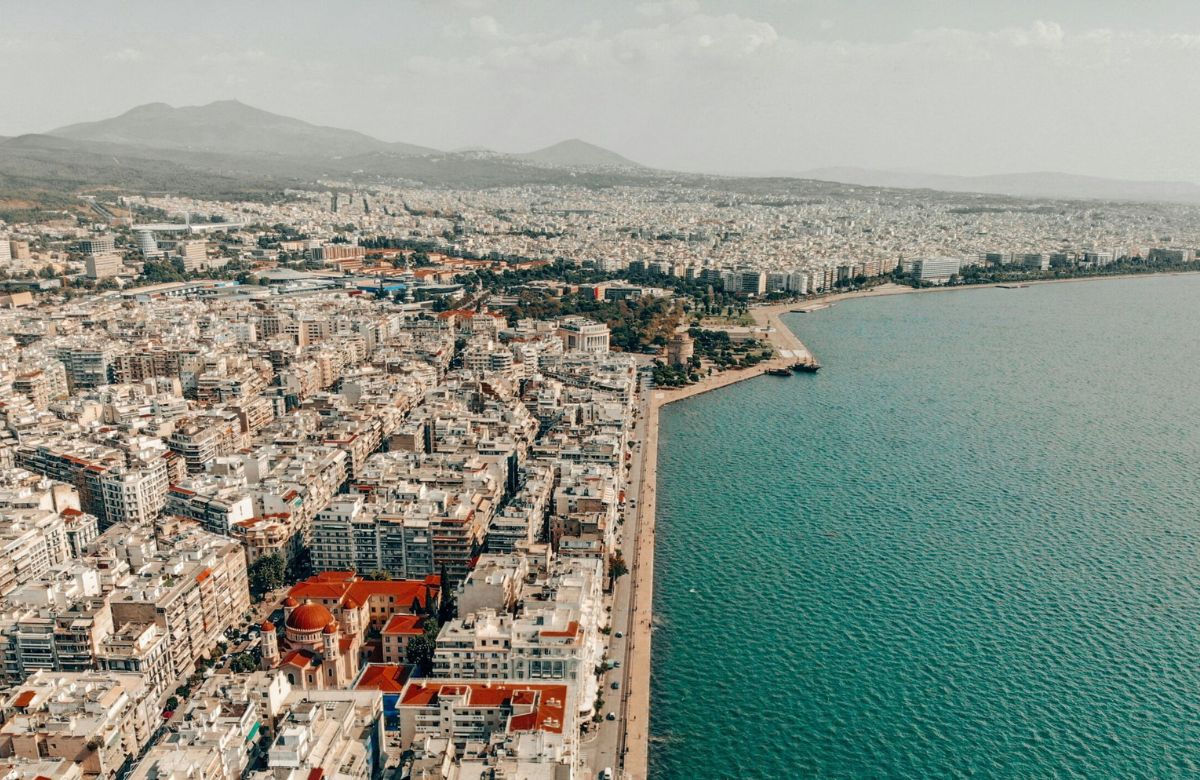

The first figures since the Thessaloniki Airbnb restrictions took effect show a 25% drop in new listings in the city centre over four months. There is still no evidence that the measure has brought homes back onto the long-term rental market. Meanwhile, revenue per listing rose in September and October, and demand for short-term stays continued to grow nationwide, with Airbnb nights booked up 11.5% in the first nine months of 2026.
The figures were presented at the Short Stay Thessaloniki Conference 2026, held as part of the 41st Philoxenia tourism exhibition. Industry representatives discussed the early impact of the restrictions and emerging trends in short-term rentals. Much of the debate focused on whether the registration freeze could help address the housing affordability crisis, with industry professionals questioning whether limiting new short-term rentals would, on its own, ease pressure on housing costs.

On 1 July 2026, new property registrations in Greece’s Short-Term Stay Property Registry were suspended in the City of Thessaloniki’s First Municipal Community. The freeze runs through 31 December 2026 and may be extended. It follows a similar measure introduced in parts of central Athens.
The policy aims to slow the conversion of homes into tourist accommodation as affordable housing becomes harder to find in Greece’s major cities. Its effect on long-term rents remains unclear.
New Airbnb listings fall in the city centre and rise elsewhere
Nikolas Zourmpakis of Beyond presented the first figures. Between July and October 2026, 202 new listings appeared on Airbnb in central Thessaloniki, down from 269 in the same period in 2025. The 25% decline marks a clear slowdown in the number of properties coming onto the platform.
Elsewhere in Thessaloniki, new listings rose 6%, from 205 to 217. One question is whether the freeze will shift investment towards other neighbourhoods. The figures available so far cannot establish how much of the increase outside the centre can be attributed to the measure.
Beyond tracks listings on the platform, so its data cannot show whether homes have returned to the long-term rental market. The area it defines as central Thessaloniki also differs slightly from the administrative boundaries of the First Municipal Community, where the freeze applies.
Revenue per listing in the city centre rose 11% year on year in September and 8% in October, according to Beyond. Those gains came as the flow of new listings slowed. Demand, nightly rates and occupancy also affect revenue, and Beyond said four months was too short a period to draw firm conclusions about the wider impact of the restrictions.
STAMA Greece calls for vacant homes to be brought back into use
Vasilis Argyarakis, president of STAMA Greece and CEO of See Greece, argued that the registration freeze does little to address the underlying causes of the housing crisis. In his view, experience in Athens and other European cities with similar measures has yet to show that restrictions on new short-term rentals automatically bring down rents or home prices.
Argyrakis said the restrictions make it harder for new operators to enter the market and could push up nightly rates by limiting supply. He also questioned whether short-term rental activity would shift on a large scale to neighbourhoods outside the centre, given that many visitors specifically choose to stay in central Thessaloniki.
He called for faster procedures to bring thousands of publicly owned properties into use and for homes held by banks, loan servicers and investment funds to be made available. Bringing vacant or unused properties back onto the market, he argued, could make a meaningful difference to housing supply. He also urged the Church to consider using part of its property portfolio to meet housing needs.
Argyrakis raised concerns about the rules governing Greece’s short-term rental property registration number, known as the AMA, in areas where restrictions apply. He highlighted the implications for owners who want to pass a property on to their children, arguing that the inability to transfer the registration number creates added uncertainty for people who have already invested in renovating and operating their properties as tourist accommodation.
He said improving housing affordability would require a combination of more homes on the market, less bureaucracy and targeted social housing policies.
Airbnb nights booked in Greece rise 11.5%
While Thessaloniki is trying to curb the growth of short-term rentals in its city centre, Airbnb demand continues to rise across Greece. According to figures presented by Airbnb’s Kostas Kavouras and Alberto Modaffari, searches for accommodation in Greece rose 10% between January and September 2026 compared with the same period in 2025. Nights booked increased by 11.5%.
Several popular island destinations recorded the strongest gains. Nights booked rose 25% in Naxos and the Small Cyclades, 20% in Zakynthos and 17% in Paros. Crete and Rhodes each recorded a 16% increase. In northern Greece, nights booked rose 4% in Thessaloniki and 6% in Halkidiki.
Türkiye was among the fastest-growing source markets, with nights booked up 32.7%. The UK recorded an increase of 16.3%, followed by Germany at 14.8%.
Germany remained the largest source market for guests booking stays in Greece through Airbnb. The Greek domestic market ranked second, followed by the United States.
Greece’s property registry and enforcement
Konstantinos Chaidoutis, president of the Thessaloniki Property Owners’ Association, argued that the short-term rental sector has taken a disproportionate share of the blame for the housing crisis. He said short-term rentals complement hotels by meeting accommodation needs that hotels do not always serve.
Chaidoutis also questioned whether the freeze in Thessaloniki’s First Municipal Community would have a meaningful effect on housing costs. He described undeclared short-term rental activity as a complex enforcement issue and said Greece’s Property Ownership and Management Registry, known as MIDA, could help authorities track properties and carry out checks.
The freeze is due to expire at the end of 2026, with an extension still possible. So far, the figures show a marked slowdown in new Airbnb listings in the city centre. Whether more homes become available for long-term tenants remains to be seen. Changes in long-term rents, new listings outside the centre and the performance of existing short-term rentals will help assess the wider impact of the measure.
