





Greece records the largest increase in prices for Airbnb-type accommodations between the summer and the off-season across Europe, according to a new AirDNA analysis of the short-term rental market.
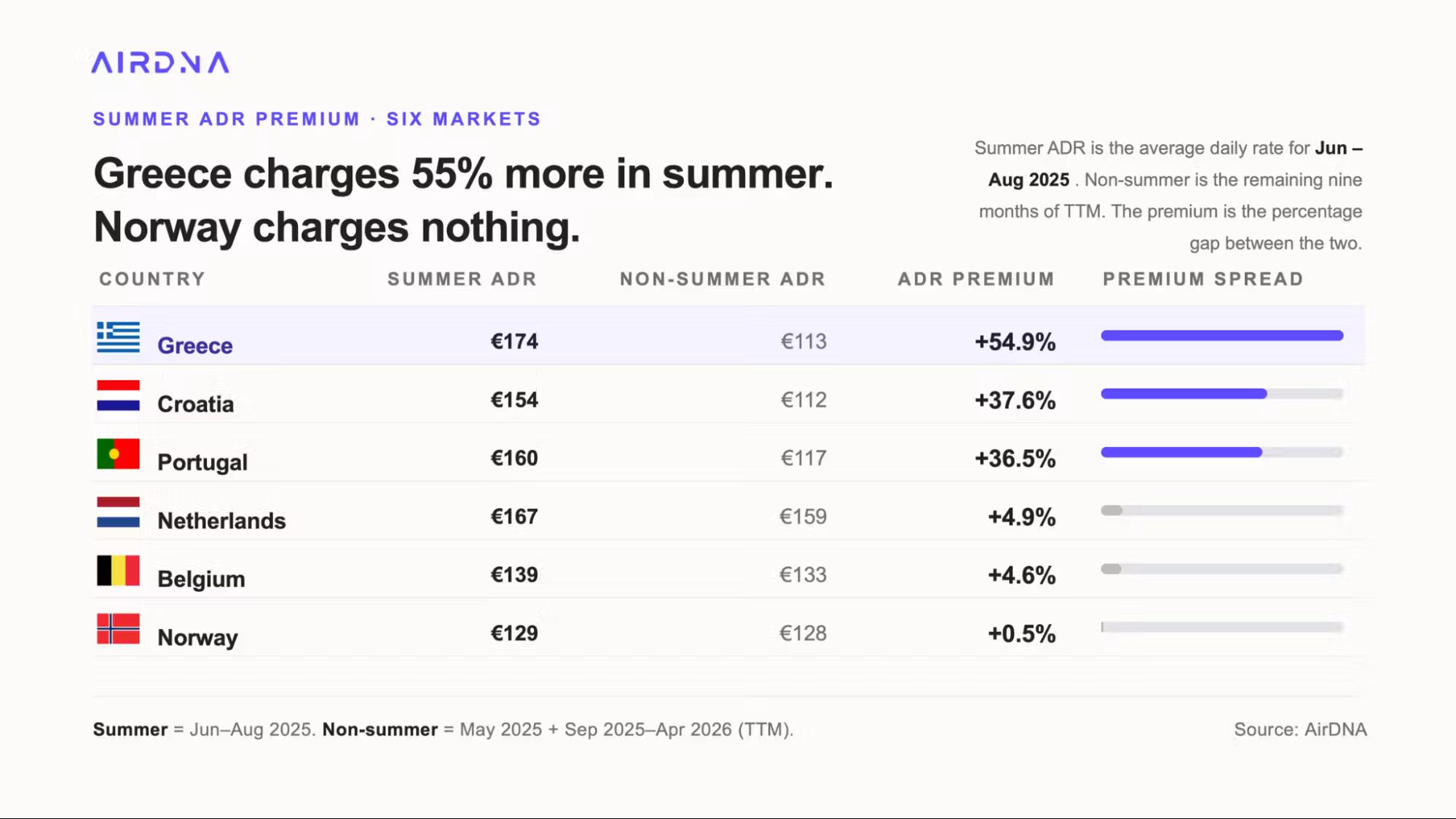
The data shows that average daily rates (ADR) in the country rise by 54.9% during the months of June to August compared to the rest of the year, the highest figure in the European short-term rental market.
Specifically, the average daily revenue per night in Greece stands at €112.64 during the remaining nine months of the year and jumps to €174.46 during the summer season.
This performance places the country above other strong Mediterranean destinations. In Croatia the corresponding increase reaches 37.6%, while in Portugal it stands at 36.5%.
The news is not that Greece is expensive
Although discussions around Greek tourism often focus on rising travel costs, AirDNA’s data highlights a different reality.
The news is not that Airbnb prices in Greece are high. The news is that it remains the most seasonal short-term rental market in Europe, with the largest gap between summer and off-season pricing.
In other words, the country continues to rely heavily on demand concentrated in the three peak summer months, when popular island destinations attract the majority of international arrivals.
This finding is particularly significant at a time when extending the tourist season is at the center of both government and industry strategy. Despite improved air connectivity, longer hotel operating seasons, and efforts to promote off-peak destinations, the data shows that seasonality continues to strongly define the Greek market.
Mykonos among Europe’s biggest seasonal price jumpers
The picture becomes even more pronounced at destination level.
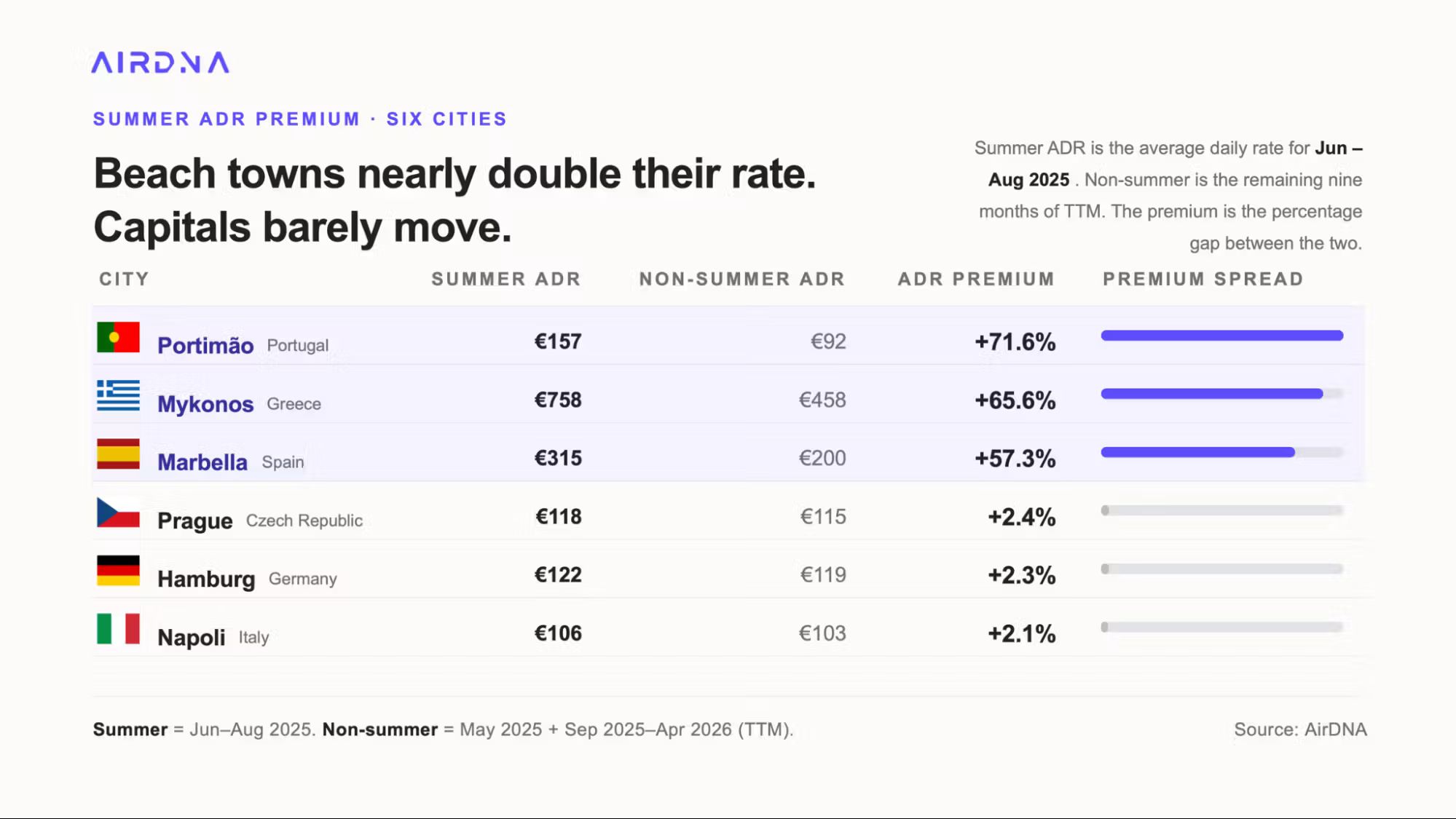
According to AirDNA, Mykonos is among the European markets with the largest seasonal fluctuations. The average daily short-term rental rate increases from €457.95 in the off-season to €758.45 in summer, marking a 65.6% rise.
This performance places the island among the leaders in Europe in terms of the so-called “summer premium”, meaning the extra cost paid by visitors during peak season.
What this means for hosts
For short-term rental property managers and owners, the findings confirm that pricing strategy during peak months remains critical for overall property performance.
At the same time, they highlight the challenges faced by the market outside the summer season. The wider the gap between high and low season, the greater the need to attract new visitor segments, develop thematic tourism products, and boost demand during the shoulder season.
AirDNA’s analysis shows that in countries such as Norway, Belgium, and the Netherlands, summer prices differ only marginally from the rest of the year, reflecting a more balanced distribution of tourism demand.
In Greece, by contrast, summer still generates a disproportionately large share of short-term rental revenue. And that may be the most important message behind AirDNA’s data.