


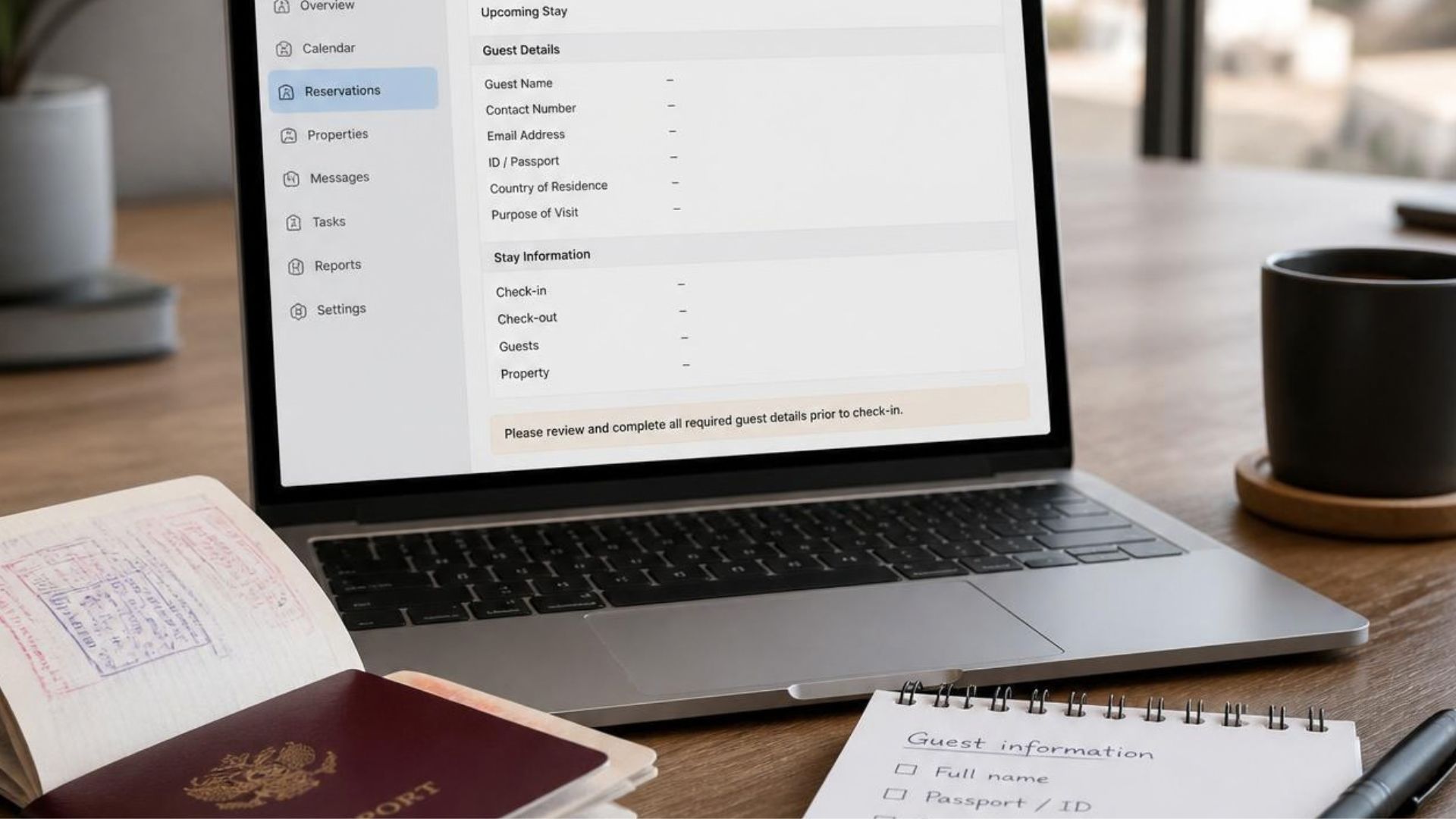


Managing short-term rental properties in Greece now comes with strict tax obligations. Each month ends with the obligation for property owners or managers (hosts) to submit the “Short-Term Stay Declaration” on the AADE platform by the 20th day of the following month.
However, one of the most frequent and difficult problems faced by professional and private hosts is the refusal –or inability– of certain guests to provide the necessary identification details, such as their Tax Identification Number (TIN) or passport number.
What happens, however, when the guest disappears, ignores messages or categorically refuses to provide their details? How can the host protect themselves before the tax authorities without risking fines?
The legal reality: What exactly does AADE require?
Under the current legal framework for short-term rentals, the tenant’s details are required to properly complete the electronic declaration with AADE.
For Greek citizens
For a Greek guest who has a Greek TIN, the host should not assume that a booking through Airbnb or another platform replaces their own tax obligation.
AADE explicitly states that the property manager is required to submit a Short-Term Stay Declaration electronically for every short-term rental.
Therefore, when the guest has not provided their TIN, the host should contact them in good time and explain that the information is requested as part of the tax declaration for the stay.
The communication can take place through the platform used to make the booking, so that there is also a written record of the request.
What the host should not do is enter an arbitrary or fictitious TIN in order to complete the declaration.
For Guests from abroad
The situation is different for a guest who does not have a Greek TIN. It is mandatory to enter the passport number or official travel document/identity card number (for EU citizens) and the country of origin.
The issue is that a TIN is not a general, mandatory element of the booking process on international platforms. Airbnb, for example, requests certain basic information from guests, without the TIN being among the general details required for every booking. As a result, the burden falls on the host, who may face the guest’s suspicion.
AADE itself clarifies that the obligation to obtain a Greek TIN concerns foreign persons who manage properties or earn income from short-term rentals and not guests solely in their capacity as tenants.
The AADE information on the Short-Term Stay Declaration also provides for a distinction between a tenant with a TIN and a foreign tenant, with a field for the passport number or EU identity card number. Therefore, before asking every guest for a TIN, it is important for the host to check which details are required depending on the specific case.
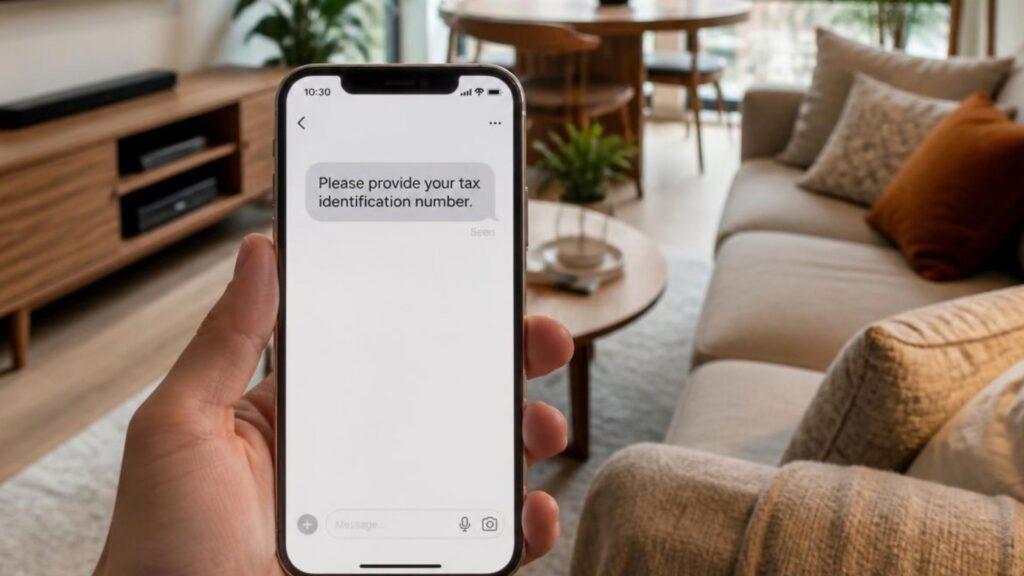
What the host should do when the guest refuses
If a guest does not respond to your request for their details, experts recommend following a specific strategy:
Proactive and clear communication
Do not wait until the last minute or check-out. Include a polite but clear explanation in your automated welcome messages (pre-arrival messages). Explain to the guest that, under Greek legislation, declaring the stay to AADE is a legal obligation and not an optional request by the host. For foreign tourists, emphasize that only the passport number is requested and not a TIN.
Emphasizing security and legality
Many guests (particularly from abroad) fear phishing or identity theft when they are asked for a TIN. Explain that the information is requested to fulfill the tax and administrative obligations provided for under Greek legislation and that it must be handled in accordance with the applicable data protection obligations.
Using the platform’s official channels
All communication should take place through the platform’s internal messaging system (e.g. Airbnb inbox), so that the host can demonstrate, if necessary, that the required information was requested in good time.
When the guest refuses to provide a TIN
If the guest refuses to disclose their TIN, the host faces a practical issue for which they should not seek an arbitrary solution. AADE requires the submission of a Short-Term Stay Declaration for every relevant rental, but the host should not enter fictitious or random tax information that they do not have. It is advisable to retain the information received from the platform, such as the guest’s full name and booking details, and consult their accountant or tax adviser on the correct handling of the specific case.
Particular attention is also needed regarding older information that continues to circulate online. The existence of older guidance on using nine zeros (“000000000”) in specific tax procedures does not mean that the same number can be used today as a general solution when a guest’s TIN is unavailable. The applicable procedure should be checked against AADE’s current guidance.
Timely information is key
The lack of coordination between international booking platforms and the Greek tax administration (AADE) continues to create friction. The host’s best “ally” is transparency from the outset. By informing guests before they even arrive at the property about why the TIN or passport is required, most misunderstandings can be resolved, thus protecting the business from complications and fines.
