


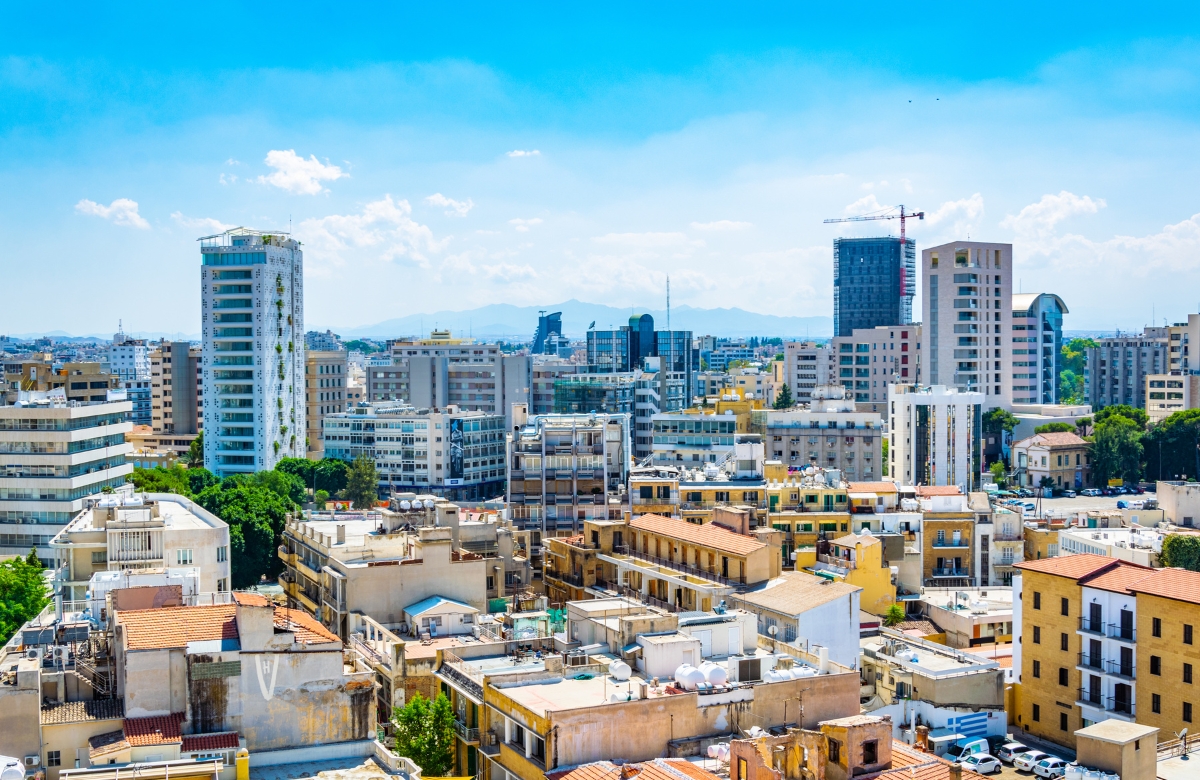

How can Cyprus record a 42.7% increase in permits for new homes while access to housing becomes increasingly difficult? Data from the Statistical Service of Cyprus reveal a market marked by a substantial historical shortfall in housing production, thousands of underused buildings and prices rising faster than incomes. The crucial question is no longer simply how many homes are planned, but how many will actually be built, where they will be located and who will ultimately be able to buy or rent them.
Cyprus’ housing paradox
Cyprus is facing a complex housing challenge, as the significant increase in construction activity is not enough, on its own, to address the pressures that have accumulated in the housing market. The country must meet current housing needs, deal with the consequences of declining residential production during the previous decade and, at the same time, make use of a substantial stock of vacant buildings that remains outside the market.
The scale of the problem is reflected in three telling figures: approximately 24,600 fewer residential units were permitted between 2011 and 2024 compared with a hypothetical historical benchmark; an estimated 30,000 buildings remain unoccupied; and house prices increased by 21.3% between 2023 and 2025, outpacing wage growth.
This picture highlights a fundamental contradiction. On the one hand, the market is showing strong investment and construction activity. On the other, households continue to struggle to buy or rent a home.
The objective, therefore, is not simply to increase construction activity, but to turn it into genuinely available homes that meet people’s needs and remain within their financial reach.
The historical shortfall of 24,597 homes and the lost five years
An important dimension of the housing problem emerges from data published by the Statistical Service of Cyprus on permitting activity between 2011 and 2024. Using a benchmark of 10 permitted residential units per 1,000 inhabitants, the analysis estimates that approximately 125,934 units would have been expected to receive building permits over the 14-year period.
In reality, permits were issued for 101,337 residential units—24,597 fewer than this hypothetical level. The gap represents approximately 19.5% of the number that would have been reached using this benchmark and reflects the decline in permitting activity relative to the selected historical reference point.
The period from 2015 to 2019 is particularly significant, accounting for approximately 16,400 of the overall shortfall of 24,597 units. In other words, nearly two-thirds of the hypothetical gap was concentrated within just five years.
This figure highlights the importance of that period for the market’s subsequent development. Lower permitting activity can affect housing supply in later years, as a considerable amount of time usually passes between the issue of a permit and the completion and delivery of a property.
An important clarification is needed, however. The 24,597 units do not represent a recorded shortage of homes in today’s market. They represent the difference between the actual number of permits issued and a hypothetical scenario based on a historical benchmark.
Calculating how many homes are genuinely missing from the market would require taking into account completed properties, demolitions, vacant homes, second homes, population trends and, above all, the number of new households seeking accommodation.
Despite these limitations, the calculation offers a useful indication of the scale of the challenge facing the Cypriot housing market.
How many new homes does Cyprus need each year?
With a population of approximately one million, the benchmark of 10 permitted residential units per 1,000 inhabitants translates into roughly 10,000 new units annually. If Cyprus also sought to close the hypothetical historical gap of 24,597 units over five years, it would require approximately 4,900 additional permits each year.
Under this scenario, annual permitting activity could approach 15,000 residential units.
This is, however, an indicative calculation rather than an evidence-based housing production target. The number of homes the country actually needs depends on demand in each area, the properties already under construction and those that could be brought back into use.
More importantly, the issue of a building permit is not the same as the delivery of a home. A project may be delayed, modified or even abandoned.
Housing policy therefore cannot rely exclusively on the number of permits issued. It must also monitor how many homes are completed and how many ultimately become available for owner occupation or long-term rental.
Permits surged by 42.7% in 2025—but will the homes be built?
The latest data on construction activity raise expectations of a stronger future housing supply. According to the Statistical Service of Cyprus, building permits issued in 2025 covered a total of 16,171 residential units, an increase of 42.7% compared with the previous year.
This represents a significant acceleration and suggests that the market is entering a period of heightened permitting activity. The figure of 16,171 units exceeds both the indicative level of 10,000 permits a year and the hypothetical target of approximately 15,000 units that would result from closing the historical gap gradually over five years.
This does not mean, however, that the housing problem is already being resolved. These units represent potential supply for the coming years. They are not homes that have already been completed and delivered to buyers or tenants.
The real challenge is now the transition from permits to construction. The time needed to obtain the required approvals, secure financing and complete essential infrastructure, along with the cost of building materials and the availability of labour, will determine how many of these homes ultimately reach the market—and when.
Delays can have a twofold effect. First, they postpone the increase in housing supply. Second, they raise project financing costs, affecting the financial viability of developments. In some cases, the additional cost may be passed on through higher asking prices. In others, it may reduce investors’ returns or lead to projects being postponed.
The crucial issue, therefore, is not simply how many permits are issued, but how many are converted into completed homes offered at prices households can afford.
The paradox of 30,000 unoccupied buildings
At the same time as Cyprus looks for ways to increase housing production, a substantial proportion of its existing building stock remains unused.
According to estimates by the Cyprus Scientific and Technical Chamber (ETEK), approximately 30,000 buildings are unoccupied. The figure highlights another dimension of the housing problem: additional supply does not have to come exclusively from new construction.
The renovation and reuse of existing buildings could provide a complementary source of housing, particularly in areas where there is genuine demand for permanent accommodation.
However, the 30,000 unoccupied buildings cannot be treated as an equal number of homes ready to enter the market. Some may be in poor structural condition, require extensive restoration or be subject to ownership disputes and other unresolved issues.
Other buildings may be located in areas where housing demand is limited, meaning that bringing them back into use would do little to ease the pressures facing major urban centres.
Moreover, the figure refers to buildings, not necessarily to individual residential units. It therefore cannot be compared directly with the hypothetical shortfall of 24,597 permitted units. Making effective use of this stock would require a detailed record of the properties, their location, condition and the cost of bringing them back into use.
A national register of vacant and abandoned buildings could provide the basis for targeted interventions, prioritising properties that can be restored at a reasonable cost and used to meet genuine housing needs.
Reuse is not an alternative that rules out new development. On the contrary, the two approaches can work together, strengthening supply over different time horizons.
House prices are rising faster than wages
The housing problem is not limited to the number of available homes. Equally important is whether households can afford to buy or rent them.
According to data from the Central Bank of Cyprus, house prices increased by a cumulative 21.3% between 2023 and 2025. Over the same period, average earnings rose by 18.3%, while median earnings increased by 15.7%.
The gap is significant. House prices rose three percentage points faster than average earnings and 5.6 percentage points faster than median earnings. This means that income growth failed to keep pace fully with the increase in housing prices, weakening households’ relative ability to purchase a home.
The divergence from median earnings is particularly revealing, as this indicator reflects pay levels at the midpoint of the earnings distribution and is less affected by very high salaries than the arithmetic mean. The gap helps explain why increased construction activity alone is not enough to restore housing affordability.
Even if more properties are delivered, the housing problem will persist if purchase prices and rents remain disproportionately high relative to incomes. The effectiveness of housing interventions should therefore be assessed not only by the number of new homes, but also through indicators that measure the housing cost burden on households.
Important indicators include the house price-to-income ratio, the share of household income spent on rent and people’s ability to secure financing for the purchase of a first home.
Limassol and mountain communities: Why a single housing target is not enough
Another critical factor is the geographical distribution of supply. Housing needs are not the same across Cyprus. Limassol, where the property market is particularly active, faces very different conditions from a mountain community that may be losing population.
Likewise, the construction of luxury homes does not necessarily serve the same needs as the development of smaller apartments aimed at young professionals, couples or families.
An increase in overall supply at national level does not guarantee that enough homes will become available in the locations and property categories facing the greatest pressure.
The final use of properties also matters. A home purchased as an investment and offered for long-term rental can contribute directly to the supply of permanent housing.
By contrast, a property that remains vacant or is used exclusively as a holiday home does not contribute in the same way to meeting the needs of permanent residents.
Foreign investment demand must also be examined within this context. Its impact is not uniform, as it depends on the location, type of property and its intended use. Housing policy therefore requires detailed data by district, area and housing type to identify where genuine shortages exist and what form of development could address them.
From building permits to affordable homes
The increase in permits in 2025 creates the conditions for a significant expansion of housing supply in the coming years. This positive development does not, however, eliminate the challenges that continue to face both the market and households. Cyprus must simultaneously manage the need for new housing production, make better use of its existing building stock and improve access to affordable housing.
Addressing these issues requires coordination between the public and private sectors, with an emphasis on accelerating permitting procedures, ensuring that infrastructure is provided on time and creating the conditions for investment projects to be completed without excessive delays.
At the same time, bringing vacant buildings back into use could provide an important complementary tool, provided that each potential intervention is preceded by a meaningful assessment of the property’s suitability and financial viability.
Above all, new housing production must respond to the genuine needs of households rather than focusing exclusively on demand for high-value investment properties. Cyprus does not simply need more building permits. It needs more homes that are completed, brought to market and genuinely capable of housing the people who need them. That is the standard against which the effectiveness of housing policy should be judged in the years ahead.
