



Airbnb is integrating food delivery into the guest experience, starting in five cities across Europe and the Middle East. How the new service works and what it means for the future of hospitality.
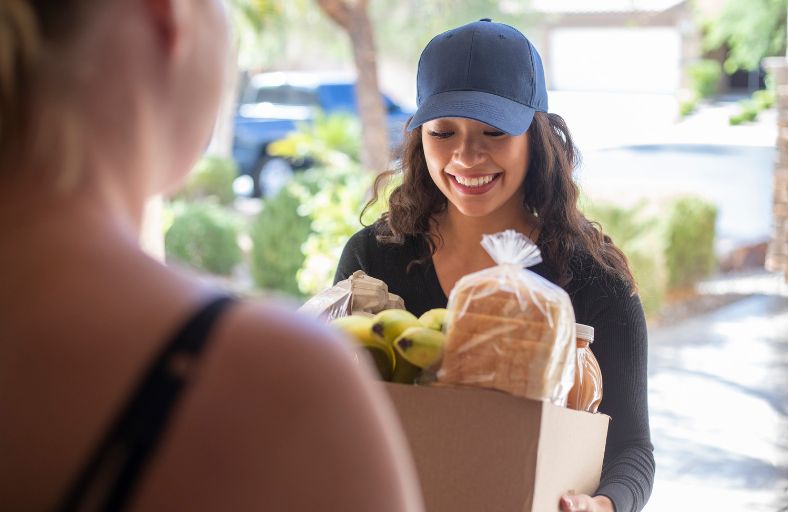
The first stop after checking into an Airbnb is often the nearest supermarket. Airbnb now wants to eliminate that extra step, integrating grocery delivery into the booking experience.

The platform has announced a partnership with Deliveroo, allowing guests to order groceries delivered directly to their accommodation. The service launched on November 17 in London, Manchester, Edinburgh, Milan and Dubai, with meal delivery from local restaurants expected to follow later in the month.
The move represents more than another delivery partnership. It is part of Airbnb’s broader strategy to bring more travel-related services into its ecosystem, gradually transforming the app from an accommodation booking platform into a tool for managing more aspects of the travel experience.
How food delivery works through Airbnb
The new feature appears in the Trips tab for eligible reservations. Guests can start placing orders up to five days before check-in or at any point during their stay.
When selecting the service, guests are directed to Deliveroo, where their accommodation address is already filled in, reducing the steps required to complete an order. Deliveries can be scheduled for after arrival, and guests can place as many orders as they wish until their checkout date.
Existing Deliveroo Plus subscribers can also retain their membership benefits, provided they use the same email address for their Airbnb and Deliveroo accounts.
For a limited time, guests with eligible reservations can also benefit from zero delivery fees on orders over £10 in the United Kingdom, €10 in Milan and AED 50 in Dubai, subject to the applicable promotional terms.
From groceries to restaurant meal delivery
The next phase of the partnership involves delivering meals from local restaurants. According to Airbnb, this feature is expected to become available later in November across the five initial launch cities. The company has also indicated that more cities will be added.
Deliveroo is the first partner to introduce Airbnb’s grocery delivery service to Europe and the Middle East. However, the concept is not entirely new for Airbnb. Earlier in 2026, the platform launched a similar service in the United States and Canada through a partnership with Instacart.
Airbnb expands beyond accommodation
The new partnership is part of a broader transformation of Airbnb’s business model. In 2025, the company introduced Airbnb Services, aiming to offer services traditionally associated more closely with hotels. In 2026, it continued expanding into additional travel services, including grocery delivery, car rentals and airport transfers.
The common objective is to reduce the small practical challenges travelers face and enable more of their needs to be met through a single platform.
This development is particularly relevant to the short-term rental industry. One of the traditional advantages of hotels has been access to additional services. As these services become increasingly available to Airbnb guests, the gap between the two hospitality experiences is narrowing.
What it means for hosts and property managers
For now, Greece is not among the markets where the new Deliveroo service is available. The initial rollout is limited to the five cities announced by the two companies.
Nevertheless, the development is relevant to Greek hosts because it highlights the direction in which the guest experience is evolving. The ability for travelers to arrive late at night and easily order water, breakfast supplies or essential groceries directly to their accommodation reduces the need for hosts to arrange similar services themselves or repeatedly answer questions about nearby shops.
At the same time, it brings another practical consideration into focus: clear delivery instructions for the property. In apartment buildings, residential complexes or properties with difficult access, accurate information about entrances and property locations could become increasingly important if such services expand.
The property becomes part of a wider service ecosystem
The Airbnb–Deliveroo partnership shows that competition in hospitality is no longer limited to accommodation prices, location or property amenities. It increasingly extends to the convenience of the entire guest experience, from booking and arrival to meals and everyday needs during the stay.
For hosts, this does not necessarily mean they need to provide more services themselves. It does, however, mean that travelers are becoming accustomed to an experience that involves fewer steps and less planning on their part.
As Airbnb expands these partnerships into additional markets, such convenience is likely to become an increasingly important part of guest expectations.
